Aikido Security's Infinite
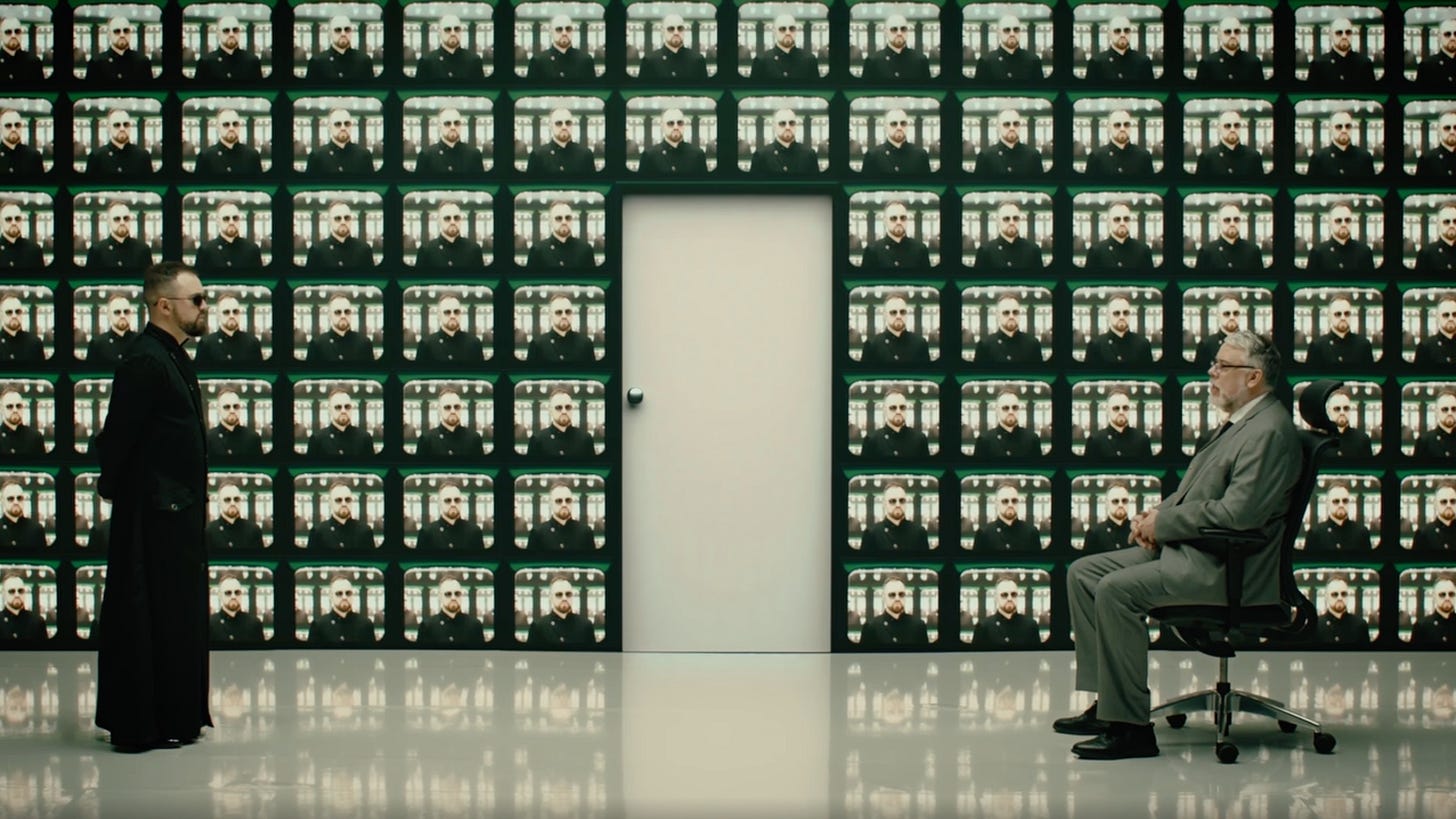
A quick note: Everything I’m sharing here is my subjective take on Aikido Security’s Infinite campaign as I’m not privy to their performance metrics or strategy. The recommendations at the end are offered with deep respect for the Aikido Security marketing team and is purely a thought exercise in how I might have approached certain elements differently.
Now, let’s talk about The Matrix.
Introducing Aikido Security & the Infinite Campaign
Aikido Security is a developer-first security platform that helps software teams find and fix vulnerabilities across their code, cloud, and infrastructure. Think of them as the security layer that lives inside your development workflow rather than sitting outside it waiting to be consulted once a year.
In early 2026, Aikido launched Infinite, their autonomous AI pentesting product. The pitch is direct: instead of scheduling an annual pentest with a human team, Infinite deploys AI agents that pentest every feature release automatically, validate exploitability, generate patches, and retest the fix, all before code hits prod. They call it self-securing software.
To launch it, they made a Matrix-themed campaign video, brought the campaign to RSAC, and in doing so, showed what’s possible when a small security marketing team bets on a bold idea and sees it all the way through.
Why the Annual Pentest Is the Perfect Villain
The annual pentest is one of those practices the security industry accepted as standard, built compliance frameworks around, and largely stopped questioning. You hire a firm, they test your environment once a year, they hand you a report, you remediate what you can, and you wait twelve months to find out what else you missed.
Meanwhile your team ships code daily.
Aikido’s argument is simple. That practice is a relic. And they didn’t make that argument with a features deck or a whitepaper. They made it with a film.
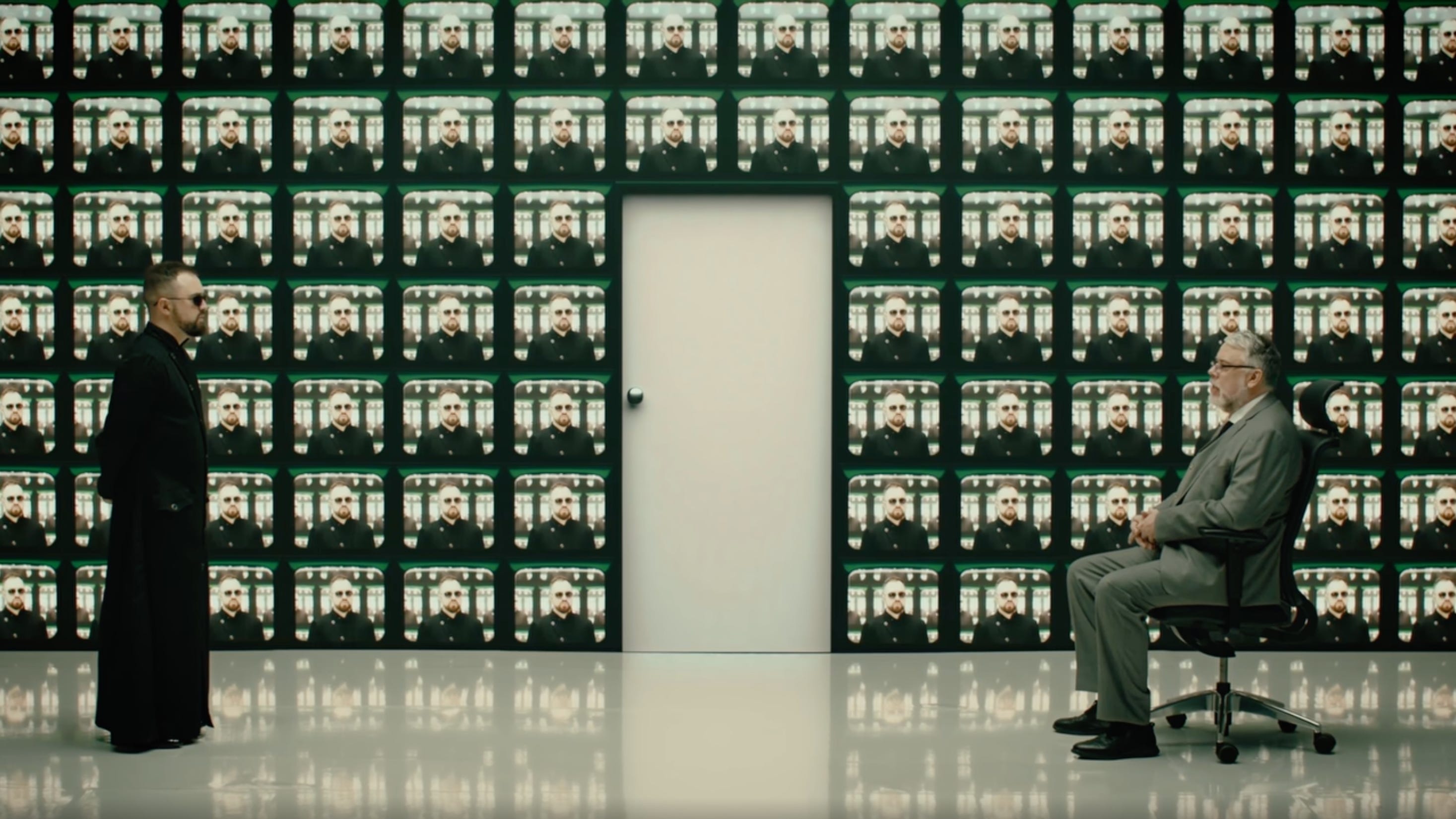
The creative concept borrows directly from The Matrix Reloaded, specifically the Architect scene, one of the most iconic sequences in the franchise. In the film, the Architect is a grey-suited figure who sits in a room surrounded by monitors and confronts Neo with the truth about the system he’s been living inside. Aikido recreated that scene with deliberate precision. The grey suit, the monitor wall, the philosophical dialogue, the door in the background. All of it maps directly to that specific scene.
Here’s what makes the creative choice genuinely brilliant. The Matrix’s entire premise is about waking up from a system that has been presented as normal and inevitable, when in reality it’s a construct that serves the system, not the people inside it.
The annual pentest is exactly that. Something people do because everyone does it, not because it actually works. Aikido is the one saying: what if the thing everyone accepts as reality is actually the problem?
What Aikido did next elevated the concept further. The two actors in the video are Roeland Delrue, Co-Founder and CRO/COO of Aikido, and Mike Wilkes, their Field CISO. Roeland plays Neo. Mike plays the Architect. These are not hired actors. These are the people running the company.
And that decision matters more than it might appear.
What Aikido Executed Brilliantly
The Video is a Short Film, Not a Product Video
The narrative structure is what separates this from every other security product launch video you’ve seen this year.
There is a protagonist, Neo, the buyer confronting his own outdated beliefs.
There is an antagonist, the Architect, the embodiment of old-world security thinking, seated in his chair delivering the uncomfortable truth.
There is a conflict, the annual pentest versus the reality of daily shipping.
And there is a resolution, self-securing software.
That is a three-act structure in two minutes and twenty seconds, and it works.
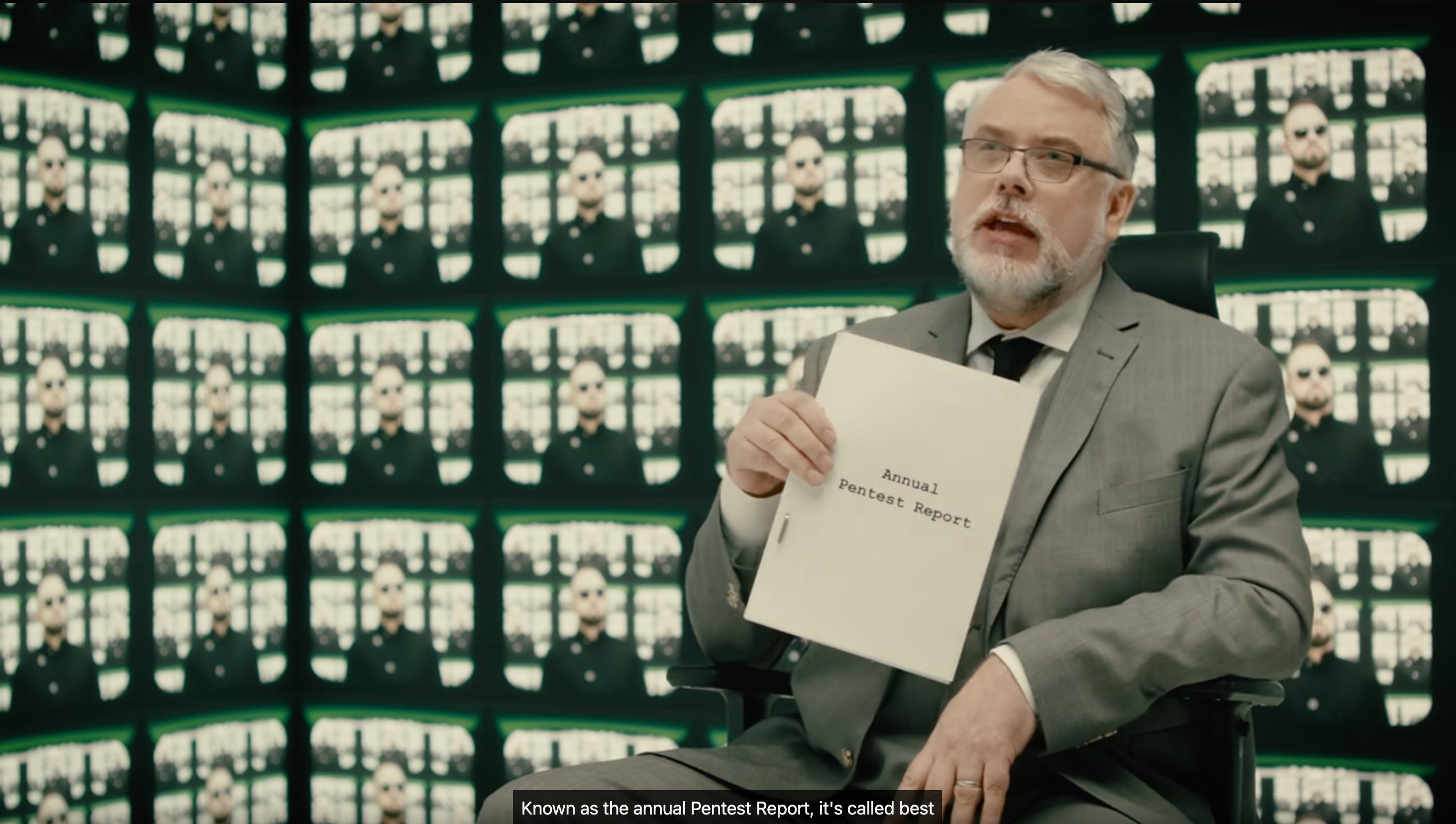
The dialogue is doing real strategic work throughout. “You ship daily, yet you test annually” is such a sharp problem articulation. It doesn’t require context or explanation. It lands in six words. “Frequency is not the issue. You are.” is a provocation that respects the audience enough to challenge them directly. And “SELF-SECURING SOFTWARE. IT’S OBVIOUS.” as the closing line is as confident of a closing statement as they come. It doesn’t ask for agreement. It assumes it.
Casting Their Own Leaders Was a Stroke of Genius
The decision to put Roeland and Mike on camera isn’t just a cost-saving choice, though it is that too. It’s a parasocial relationship builder at scale.
When security buyers see the Co-Founder and Field CISO of a company fully committed to a creative bit, it creates a sense of knowing them before the first sales conversation ever happens. Warmth and familiarity built through shared cultural experience.
Leaders who are willing to be vulnerable and playful in a public creative context are signaling something important: they believe in what they’re building, and they’re not taking themselves too seriously while doing it.
The RSAC Activation Brought the Campaign into 3D
A lot of companies show up to RSAC with a booth, a banner, and a tote bag. Aikido built an experience.
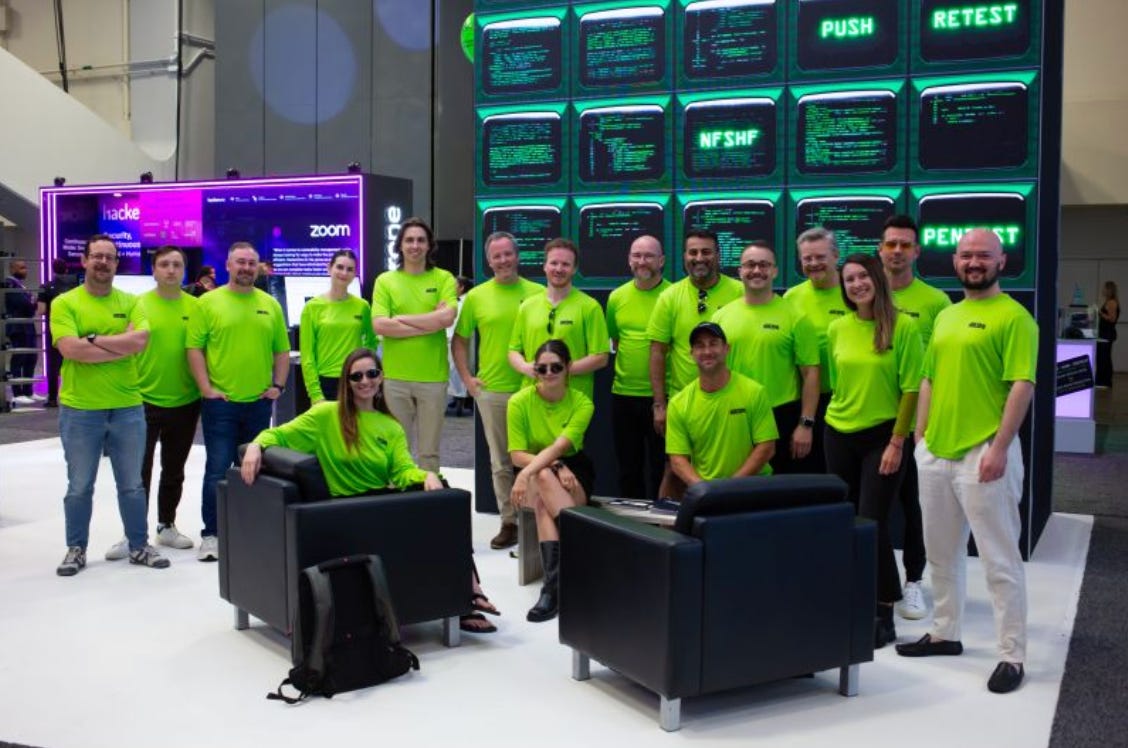
The physical monitor wall at the booth was a direct recreation of the set from the video. Someone who saw the campaign online and then walked the RSAC floor had an immediate moment of recognition. That kind of continuity between digital and physical touchpoints is harder to pull off than it looks and more valuable than most teams realize.
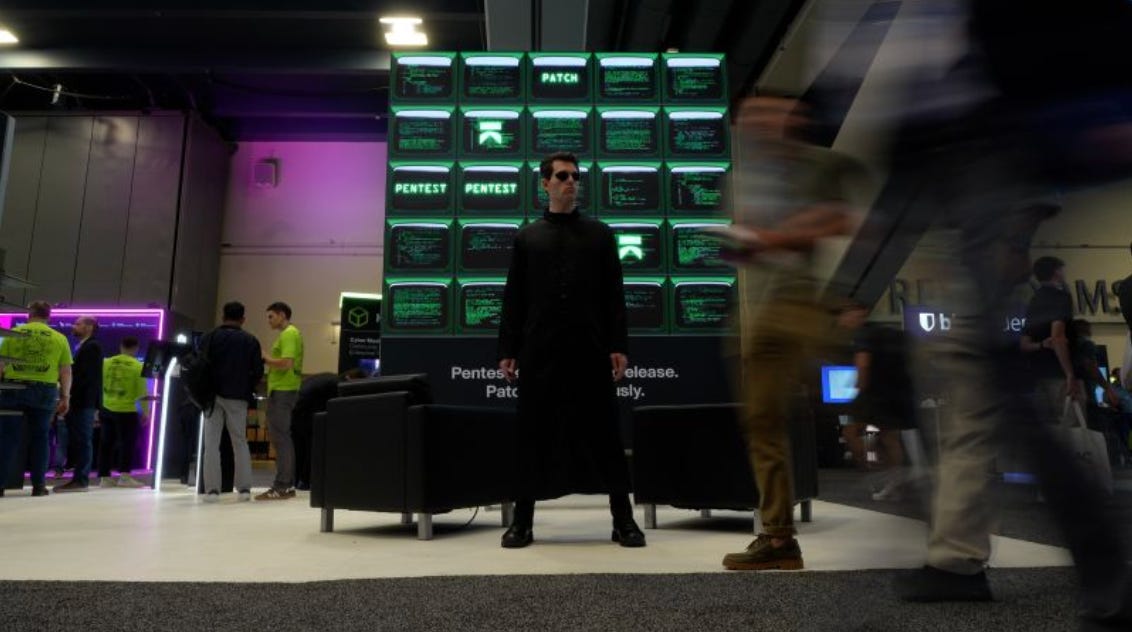
This matters because of embodied cognition. When a campaign lives only on a screen, the audience processes it cognitively. They watch, they read, they scroll past.
When a campaign enters the physical world, it engages the body. You walk past a wheat-paste poster of Neo’s face on a San Francisco street and you stop. You put on a pair of glasses at the booth and take a photo in front of the monitor wall. You stand next to a live Neo character actor and grin. Those experiences create memory traces that purely digital content cannot manufacture.
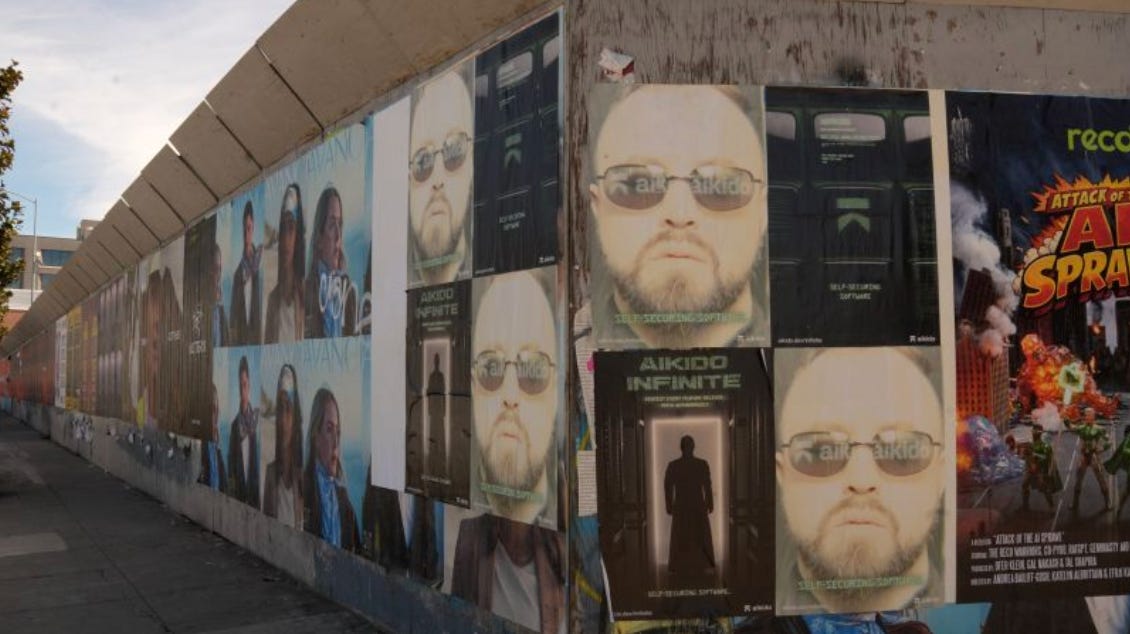
And the two reinforce each other in both directions. Someone who saw the video online arrived at RSAC already inside the world. Someone who encountered the booth first went home and found the video with context and curiosity already established.
Digital reach plus physical resonance. Neither is sufficient alone. Together they are compounding.
The neon green shirts deserve a mention too. In a sea of navy blue and corporate black at RSAC, that color choice made the Aikido team impossible to miss on the floor. It was a visibility decision masquerading as a branding decision. And it worked.
The Product Page & RSAC Landing Page Deserve Recognition
The hero CTAs on the Infinite product page, “Start Pentesting” and “How Infinite Works,” are a small thing that signals real marketing maturity. Most companies default to “Start Free Trial” and “Learn More.” Aikido chose value-based language that respects the buyer’s intent.
“How Infinite Works” is particularly smart for a technical security audience. Security buyers are pattern-matching for credibility signals constantly. When a vendor shows you exactly how the product works rather than hiding behind outcome language, it signals confidence in the technology itself.
That’s a trust accelerator.
“Not a scanner. Not DAST with AI lipstick. Offensive agents that think, adapt, and validate.” is *chef’s kiss* competitive differentiation copy.
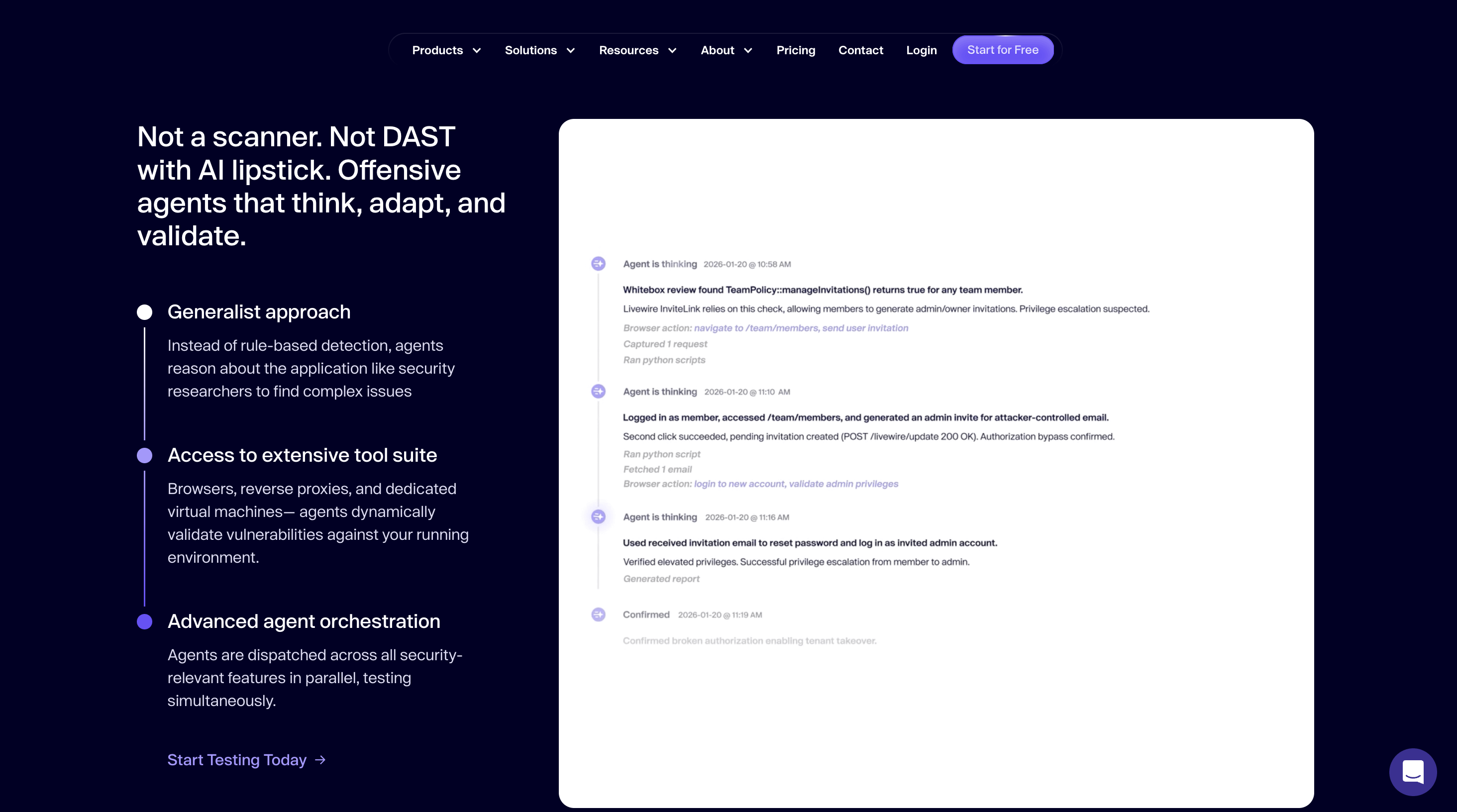
It doesn’t name competitors. It doesn’t make feature comparisons. It draws a hard line between what Aikido is and what it refuses to be. That kind of declarative positioning takes conviction to put on your own website.
The “Proven on production code” section with real CVEs, actual vulnerability IDs, actual affected systems, actual dates, is doing more trust-building work than any amount of brand copy could. For a technical audience that has been burned by AI hype, showing real findings in real codebases is more persuasive than any claim about accuracy or capability. That’s social proof operating at its most credible level.
And then there's the RSAC landing page.
"Enter the Infinite." The countdown timer rendered in green terminal text on a CRT monitor. The glassmorphic panel frames. The RSAC Drop. The leadership team intros. The event calendar.
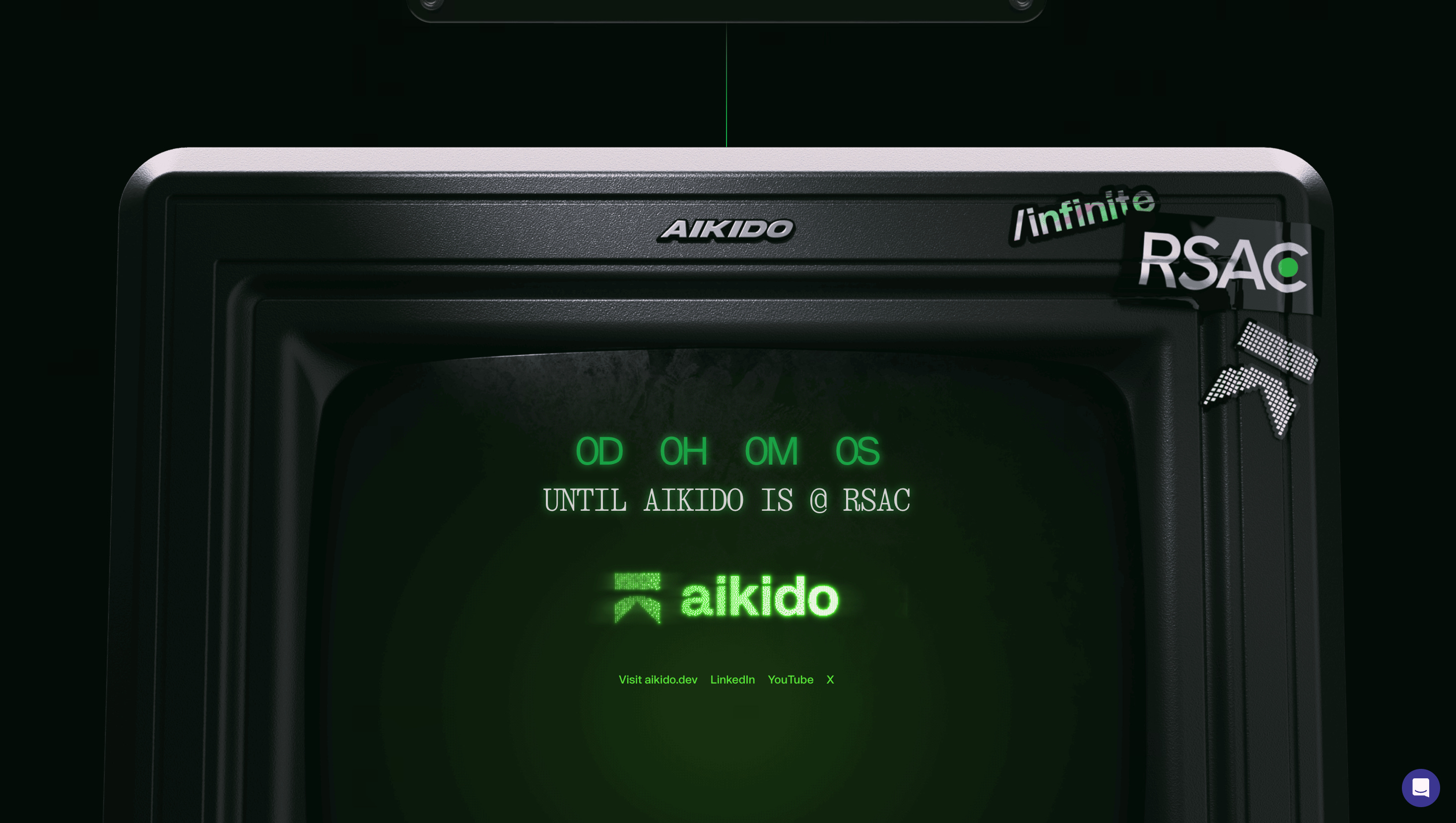
Most conference landing pages are glorified logistics docs. Aikido built an experience that extended the campaign world all the way into the most transactional moment of the conference funnel, without sacrificing any of the practical info someone actually needs to engage with a company at a conference. Every touchpoint, including the most functional ones, stayed inside the world they had built.
What I Might Have Explored Differently
Build the Campaign Landing Page the Video Deserved
This is a recurring theme in this newsletter, and it stings more here than usual because Aikido came so close. The RSAC landing page proved they had the design capability, the creative language, and the conviction to build a Matrix-themed digital destination. They just didn’t deploy it as the landing page for the hero video.
Imagine clicking through from “Software can now secure itself” on LinkedIn and landing in a continuation of the world you just left. A red pill CTA and a blue pill CTA. “Take the blue pill. Keep your annual pentest.” versus “Take the red pill. See what Aikido Infinite finds.”
That moment would have been screenshot-worthy on its own, spread organically, and landed buyers on the product page already emotionally primed. The story slows. The spell breaks.
We saw the same gap with WizZZZ at AWS re:Invent. Great creative deserves a destination that continues the story. Vanta’s Calm-pliance page remains the benchmark. Until a dedicated campaign landing page becomes standard practice, even the best campaigns are leaving something on the table.
It is important to note that it is very possible (and fair) that the Aikido team decided to not build a campaign landing page AND a product page to prioritize speed and bandwidth efficiency.
Reconsider the Big Giveaway Item
I personally love the Meta x Oakley glasses as an object. But the security community has complicated feelings about them.
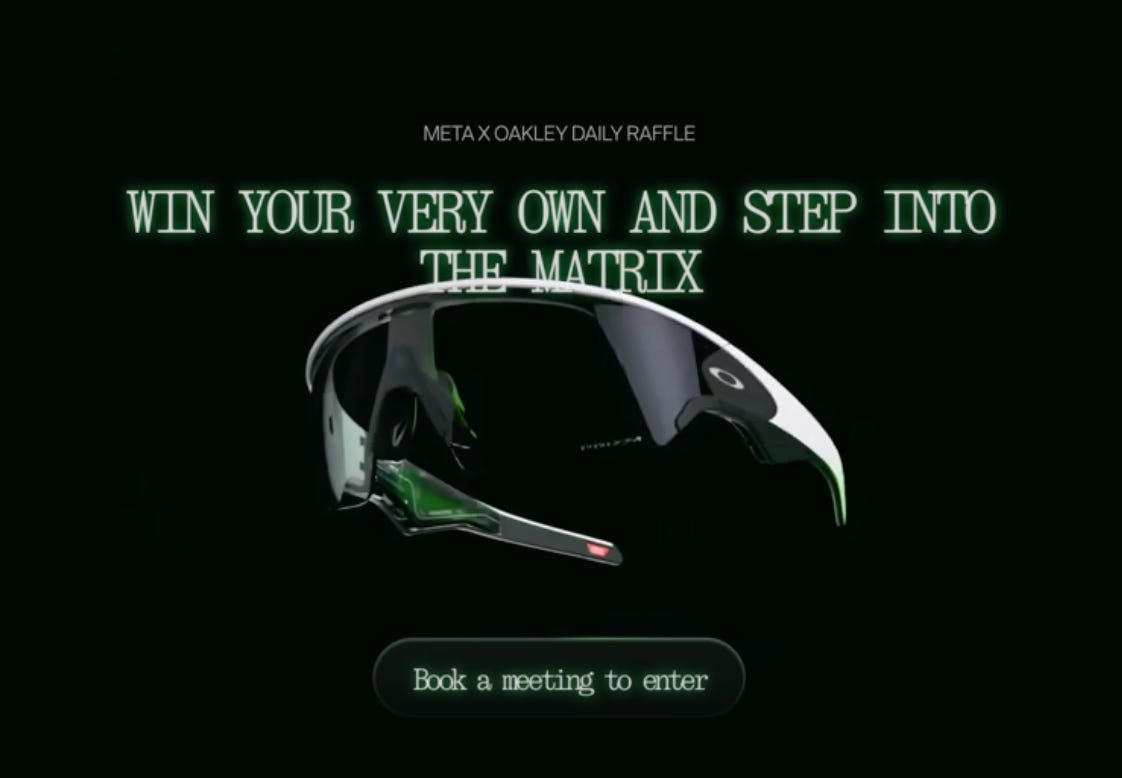
These are AI-enabled smart glasses with built-in cameras that can passively record conversations and capture screens without obvious indication they’re doing so. Many orgs have explicit policies banning them from sensitive environments, and several CISOs have publicly called them a social engineering tool.
The people most likely to have strong opinions about that are the people walking the RSAC floor.
The campaign had richer props to work with. A numbered replica of the red and blue pills in a display case. A high-quality replica of the sunglasses Neo actually wore in the film. A framed art print of the Architect’s room. Any of these would have landed with the same cultural resonance without the baggage, and would have been genuinely collectible in a way that smart glasses are not.
Use the Set to Turn This Product Launch Into a Full Funnel Campaign
Roeland and Mike were in a room together, in costume, on a professionally built set. That is an extraordinarily valuable creative asset. And as far as I can tell, Aikido used it to make one video.
The campaign video is an excellent product launch video i.e. middle-of-funnel content.
But the set could have built an entire content engine. A top-of-funnel scene where Roland defends his annual pentest report, only to have the Architect dismantle it question by question. A bottom-of-funnel scene where Roland opens Aikido Infinite via the free trial and the monitor wall comes to life with agents running in real time, the Architect watching and nodding. The tagline writes itself: “See what Roland sees.”
The set was built. The talent was there. More videos could have been made.
The Bottom Line
Aikido gave us something the cybersecurity software space rarely produces: a product launch built around a genuinely great creative idea, executed with conviction from the video all the way through to the RSAC floor.
They understood that with 5,000 cybersecurity vendors competing for attention, getting attention is no longer a nice-to-have alongside great technology. It is a competitive requirement.
There were opportunities to improve, as there always are. The campaign landing page the video deserved didn’t exist. The content funnel the set could have built wasn’t built. But those are the kinds of gaps that come from ambition running slightly ahead of execution, which is a far better problem to have than the alternative.
Very well done Aikido Security marketing team. Can’t wait to continue watching the incredible work you produce!
P.S. thanks for my wife’s new favorite perfume, LE SNAKE EAU DE PARFUM.
Every week, I write about a marketing campaign in the cybersecurity software space that stands out strategically and/or has creative execution worth studying. And every quarter, I select three “Campaigns of the Quarter” where the marketers who led the campaigns receive a free, personalized Funko Pop. Yes, I’m serious. Here’s mine as proof:

If you’ve led a campaign you’re proud of or know someone who has, message me on Substack or LinkedIn to submit it. I want to see what you’re building.
Originally published on Campaign Telemetry.
Read on Substack