Axonius' CTRL/ACT
A quick note: Everything I’m sharing here is my subjective take on Axonius’ CTRL/ACT virtual event campaign as I’m not privy to their performance metrics or strategy. The recommendations at the end are offered with deep respect for the Axonius marketing team and is purely a thought exercise in how I might have approached certain elements differently.
Now, let’s talk about virtual event campaigns.
Introducing Axonius’ CTRL/ACT Virtual Event Campaign
Recently, Lauren (Mattos) Kersanske, Director of Global Campaigns & Programs at Axonius, introduced me to their CTRL/ACT virtual event campaign hosted in October 2025. Within minutes of exploring, I couldn’t stop diving deeper into what they’d built.
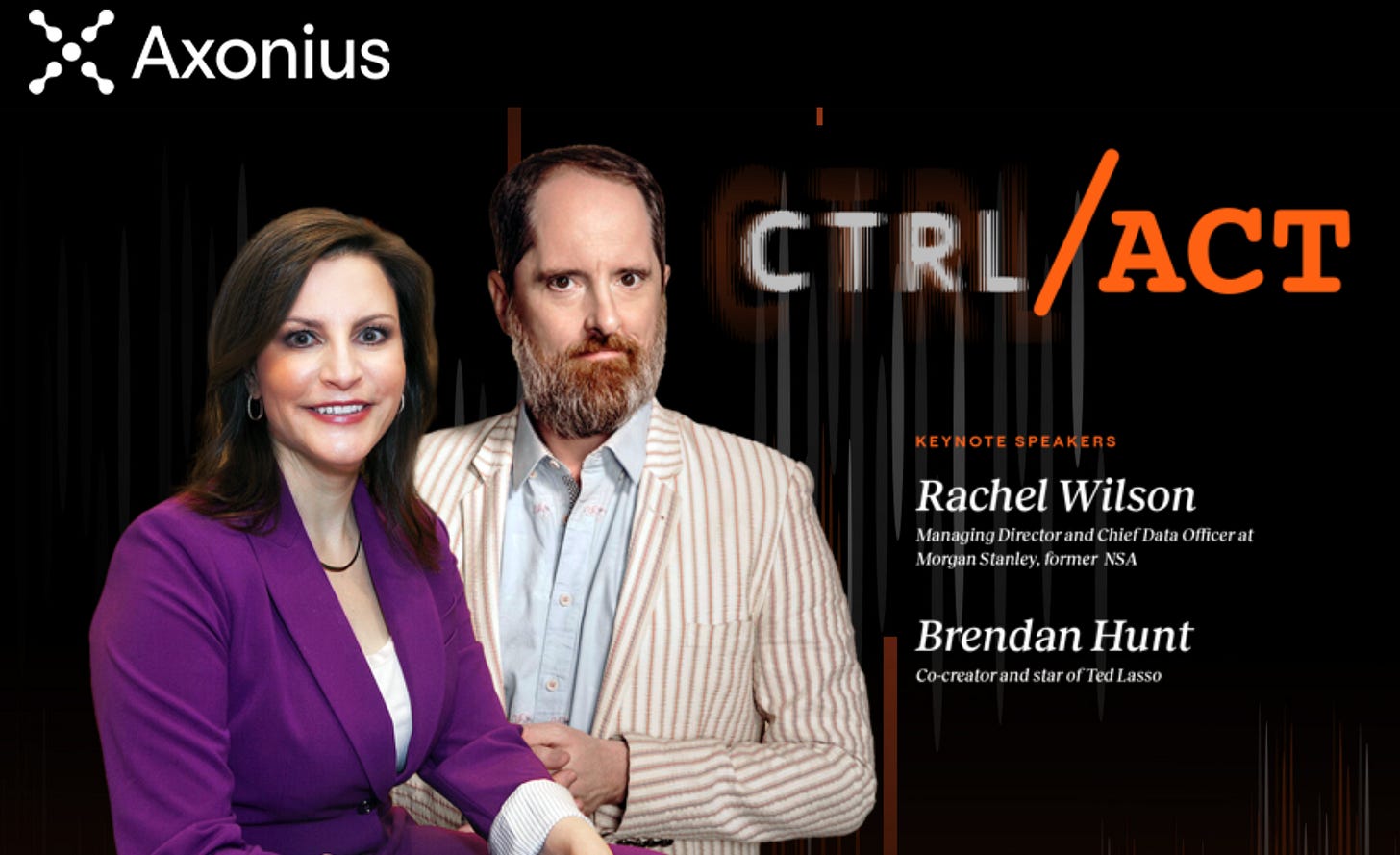
CTRL/ACT ran as a virtual event designed as a comprehensive showcase spanning thought leadership, customer stories, analyst insights, and product updates. The overall takeaway was for orgs to bridge the gap between asset visibility and security action. But the format was what caught my attention immediately: this wasn’t another “virtual event” that’s actually just a collection of run-of-the-mill webinars. The more I studied the execution, the more I saw a campaign that understood virtual events as one of the most powerful formats for a campaign.
The Strategic Case for Virtual
Let me start with something that might sound obvious but gets lost in execution: virtual events are not inferior versions of physical events. They’re a fundamentally different tool that solves different problems.
Physical events (which always live under Event Marketing) require significant investment from both the vendor and attendees. Your team is managing venue logistics, catering, travel coordination, speaker management, and about a thousand other details that can derail even the most meticulously planned agenda. Your attendees are blocking off multiple days (sometimes a full week when you factor in travel), missing personal commitments or work, and betting that the content justifies the time away.
Virtual events strip away most of that friction. And here’s where organizational ownership gets interesting: sometimes virtual events stay with Event Marketing, but other times they fall under other functions such as the Integrated Campaigns team. Regardless of who owns the virtual event, the logistics equation simplifies dramatically. No venue negotiations, no last-minute catering changes, no panic about whether the AV setup will actually work. For your attendees, participation becomes radically more accessible. Instead of taking off a week of work and missing their daughter’s dance recital, they join from their desk. They still get access to the info, but without the operational burden that makes physical attendance a bigger decision.
And here’s what makes this particularly relevant right now: many security vendors are hosting their own physical events. If every event requires physical attendance, your potential attendees have to make hard choices about which ones matter most. They simply can’t attend everything, even if they want to. It’s hard for them not to prioritize the major vendor conferences like CrowdStrike’s Fal.Con or Okta’s Oktane. By offering virtual versions, you expand the realistic possibility that someone actually shows up. You’re not competing with their travel budget or their PTO balance. You’re competing for their attention and time, whether that’s a focused 90-minute session or a full two-day experience.
This isn't about being lazy or cutting corners. It's about understanding that accessibility is its own form of value. Axonius got this, and what they built with CTRL/ACT showed they weren't just running a virtual event because it was easier. They were running one because they understood exactly the impact it could have.
The Psychology of Host Selection
Many people think it’s the content topics of a virtual event that drives attendance. I’d argue the host lineup has just as much influence, if not more.
Axonius assembled a one-two punch with Rachel Wilson, Managing Director and Chief Data Officer at Morgan Stanley, alongside Brendan Hunt, co-creator and star of the hit-show “Ted Lasso”. This wasn’t random celebrity booking. This was strategic psychology at work.

Start with Rachel Wilson. When you bring in someone at her level from an organization like Morgan Stanley, you’re leveraging what psychologists call the halo effect. This is the cognitive bias where our impression of someone in one area influences how we perceive them overall. Wilson’s credibility and authority in data and security leadership transfers to the event itself. If she’s lending her time and expertise to this, the thinking goes, there must be substance here worth paying attention to. You’re not just getting content. You’re getting validated, credible perspectives from someone who’s solving these problems at massive scale.
Then there’s Brendan Hunt. This is where parasocial relationships come into play. These are the one-sided connections people develop with media figures, where they feel like they know someone personally even though the relationship only exists through a screen. Millions of people across different generations have spent hours with Hunt through “Ted Lasso”, and that familiarity creates warmth and interest that extends beyond the show. When people see his name on the host lineup, they’re not thinking “who is this person and why should I care?” They’re thinking “I’d love to experience Brendan Hunt outside of the show.”
What makes this pairing brilliant is the cognitive diversity in appeal. You’ve got three distinct audience segments, and the host selection speaks to all of them. There’s the group deeply interested in hearing from an industry titan like Wilson. There’s the group excited to experience Hunt in a different context. And there’s a third group that finds both compelling for different reasons. Each person finds their own entry point, but everyone ends up in the same room.
Lauren (Mattos) Kersanske, Director of Global Campaigns & Programs at Axonius, was explicit about this intentionality:
“We were very intentional about balancing depth with draw. I’m not interested in celebrity for celebrity’s sake, so it mattered that every speaker aligned not just to our theme, but to our values.”
She further explains the strategic thinking behind each choice:
“Rachel brought instant credibility. She operates at the forefront of the evolving cyber-threat landscape, particularly around nation-state risk, and her perspective is practical and deeply actionable. Hosting CTRL/ACT during Cybersecurity Awareness Month made her voice even more relevant for security leaders and the public sector audience.”
On Brendan Hunt:
“Brendan was a deliberate counterweight. CTRL/ACT wasn’t just about tools and data — it was about leading and acting under pressure. His focus on empathy, trust, and decisiveness brought humanity to a technical agenda. We wanted attendees to leave thinking differently about how they lead, not just what they deploy.”
There was internal debate, as there should be with any non-traditional choice. But as Lauren describes it:
“Once we aligned on the belief that actionability requires both operational clarity and human leadership, the pairing made sense. Ultimately, we aligned around the balance of credibility and warmth.”
That tension she describes, between technical credibility and cultural appeal, is exactly what makes the pairing work strategically.
This is host selection as strategic architecture, not talent booking. Axonius understood that getting people to register isn’t about content alone. It’s about creating multiple pathways to “yes” by understanding what motivates different segments of your audience.
Execution Details That Signal Thoughtfulness & Experience
The difference between a virtual event that feels premium and one that feels like a quick Frankenstein of webinars often comes down to details that seem small individually but signal something larger in aggregate: that you’re thinking about your audience holistically, not just checking boxes.
Axonius got this right in several ways that are worth examining:
They ran a dedicated EMEA broadcast. This isn’t a novel tactic, but it aligns with something critical about becoming a global company: you have to actually care about your customer base in other regions, not just say you do. Some companies handle this well. Others don’t. By offering a separate EMEA broadcast at appropriate local timing, Axonius signaled investment in that region. They weren’t asking European customers to join at 3am. They were saying “you matter enough for us to run this twice.”
Attendees earned 6 CPE credits upon attending. Again, not groundbreaking on its own, but part of a pattern of thoughtful execution. For someone on the fence about registering, CPE credits can be the deciding factor. Staying accredited in the security space requires earning a specific number of credits per year and by offering CPE credits for the content they were already developing, Axonius created double value. Attendees get strategic insights, plus they get documented proof of continuing education that keeps their certification(s) current. That’s respecting both their time and their professional priorities.
CTRL/ACT had its own dedicated branding. This matters more than people realize. When you create distinct visual identity and messaging for an event, you’re elevating it psychologically. It’s a named, branded experience that exists as its own entity. That premium feeling doesn’t come from bigger budgets or fancier production. It comes from treating the event as something worth building an identity around. The dedicated branding tells your audience “we built this thoughtfully” rather than “we’re recycling our standard content.”
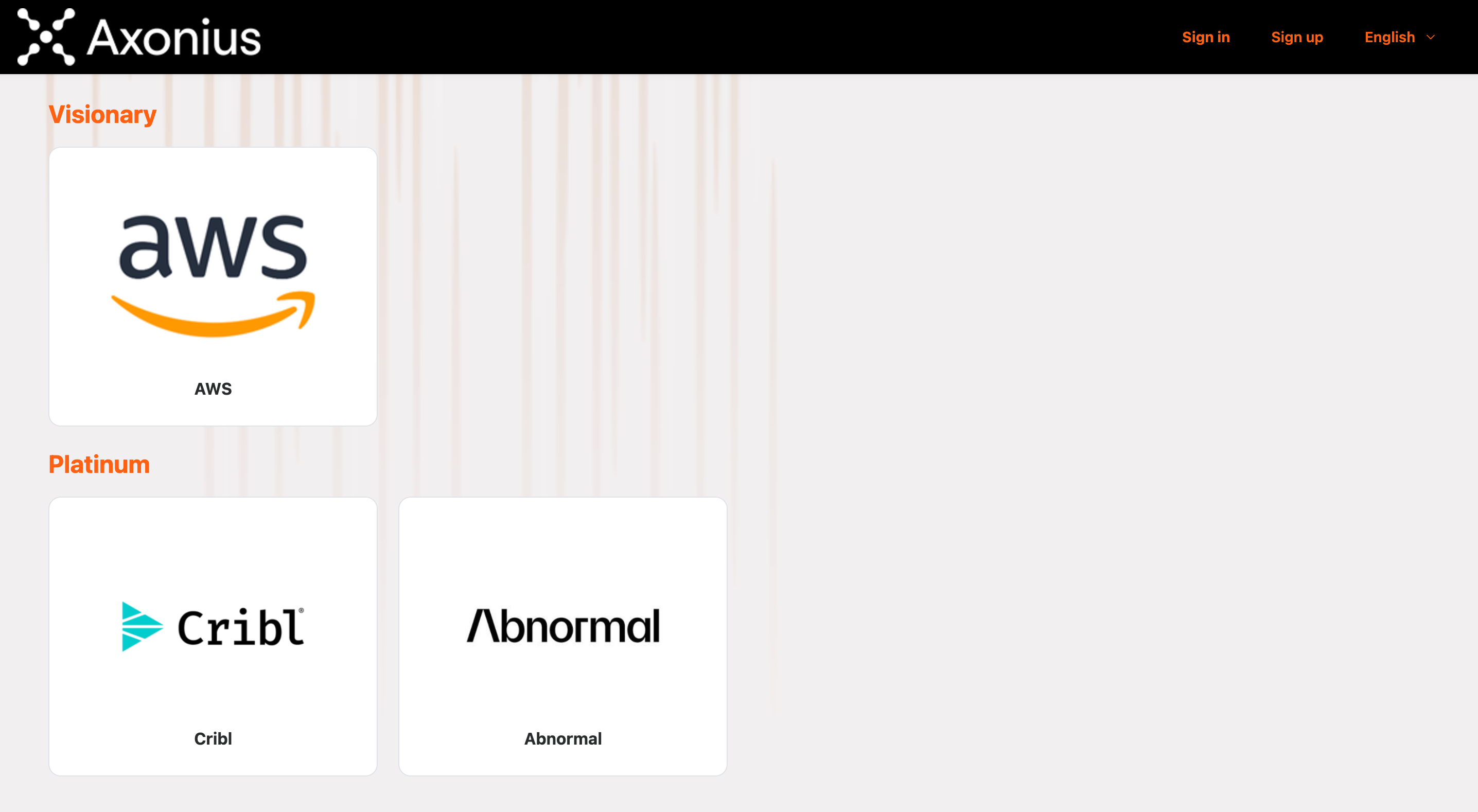
The event featured sponsors from key partners in the Axonius ecosystem such as AWS, Cribl, and Abnormal AI. This serves multiple strategic purposes simultaneously. For Axonius, it strengthens partner relationships by giving them visibility and access to a qualified audience. For partners, they get meaningful engagement rather than just logo placement. For attendees, sponsor participation often means reduced or eliminated ticket costs, plus it validates the event’s credibility (partners don’t sponsor things that lack substance). Win for the hosting company, win for partnerships, win for attendees.
None of these elements are revolutionary on their own. But together, they create a cumulative effect. They show a campaigns team that thought through the attendee experience from multiple angles and built with intention at every level. That attention to detail is what separates virtual events.
Content Architecture That Serves Everyone
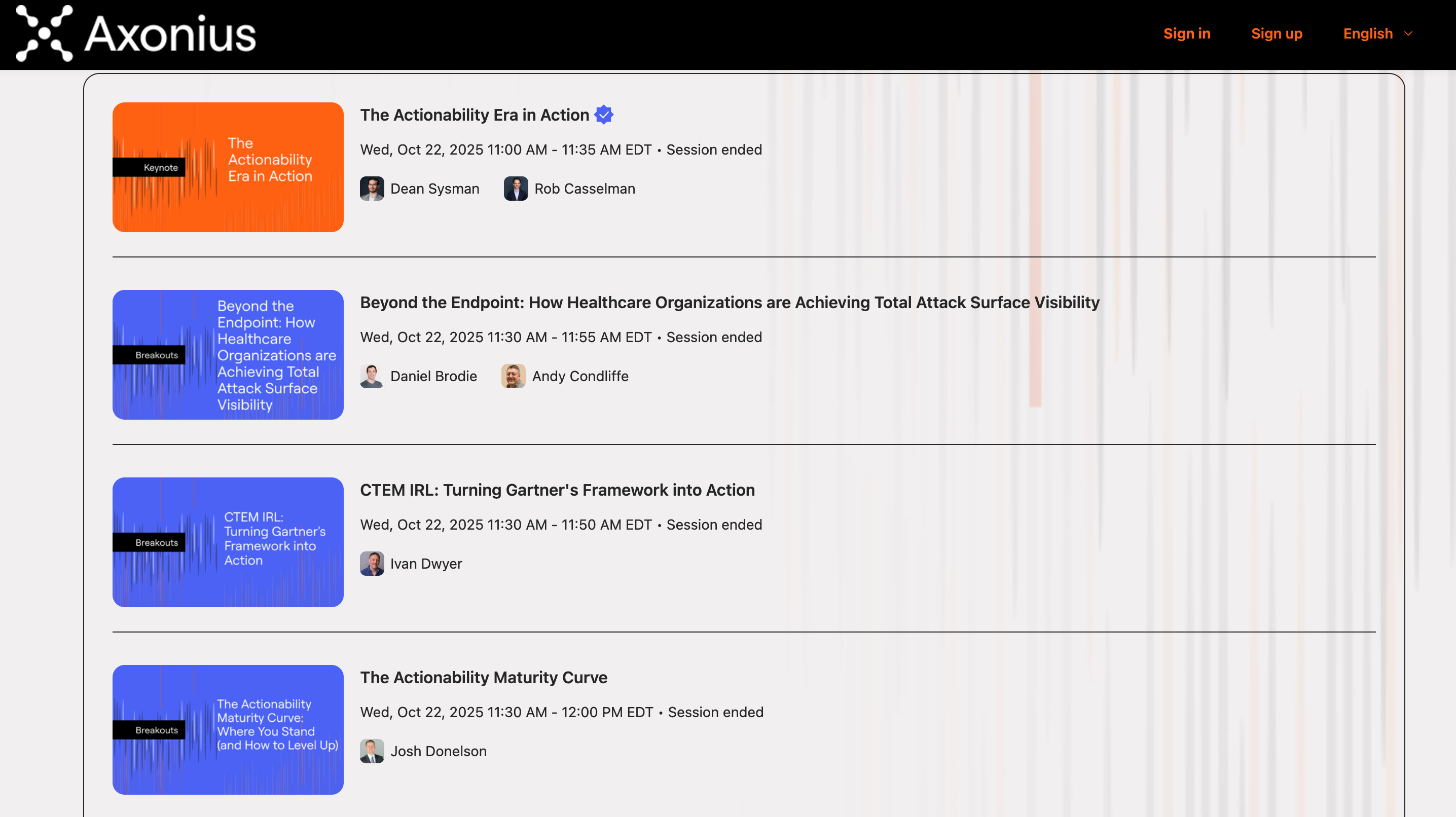
The session lineup for CTRL/ACT covered some range: thought leadership sessions like “The State of Asset Intelligence”, customer stories featuring major enterprises like Western Union, partner and analyst inclusion, and product announcements from Axonius itself. This variety isn’t accidental. It’s architectural.
From a marketing perspective, this range enables full-funnel coverage, which matters for teams trying to demonstrate value across the buyer’s journey. But more importantly, it respects the reality that your audience isn’t monolithic. They’re not all in the same place, and they’re not all looking for the same things.
For attendees at the awareness stage, thought leadership and analyst insights provide educational value without requiring commitment to Axonius. For those in consideration, customer stories deliver peer validation that’s infinitely more persuasive than vendor pitches. For existing customers or those in the decision stage, product announcements and partner showcases provide concrete roadmap visibility and integration possibilities.
By building sessions that serve different needs, you increase the likelihood that anyone who registers finds something valuable. You’re not forcing everyone through the same narrow experience and hoping it resonates.
The result is an event that works for marketing (full-funnel coverage) and for attendees (relevant content based on their actual needs). That dual optimization is harder to pull off than it looks, but Axonius made it seem effortless.
What I Might Have Explored Differently
CTRL/ACT was exceptionally well executed, but there are always opportunities to push even further. Here are a few areas I would have explored differently:
Promotion Timeline
I initially assumed that CTRL/ACT had only 3-4 weeks of promotion time and was wrong with my external analysis. Lauren corrected me:
“It was actually the opposite. We had 12 weeks, which was intentional. Best practice for virtual events is 6–12 weeks, and I wanted the full runway.”
That timeline discipline paid off. The team surpassed 3,000 registrations against an original stretch goal of 2,000 (please raise your glass to that!). But what’s more instructive than the result is how they got there.
Lauren breaks down the approach:
“There wasn’t one tactic that changed everything or drove the majority of registration. It was alignment, rigor, and shared accountability (in that order). From the beginning, I was clear that hope isn’t a plan. We aligned early on the vision and the number, then broke it down week by week. We forecasted registration targets by week, knowing most volume would come in the final three weeks. Then we set source targets, first by team (Marketing, Sales, BDR, etc.) and then by channel.”
Internal promotion became a force multiplier. As Lauren describes it:
“Sales was our biggest asset. We ran SPIFFs, gave consistent updates, showed up in Slack and on sales calls. It wasn’t glamorous, but it created shared ownership. CTRL/ACT wasn’t ‘marketing’s event.’ It was a GTM priority.”
The big lesson here is that strategic timeline planning combined with operational discipline drives results. This wasn’t about having more time, it was about using that time with intention. Every week had targets, every channel had ownership, and every internal team understood their role in hitting the number.
Physical Watch Parties in High Priority Cities
I know earlier I positioned this as choosing between virtual and physical, but why not have the best of both worlds? An idea for next year's CTRL/ACT is to host physical watch parties in cities that are highly concentrated with customers, partners, and/or tier-1 accounts. You get the accessibility and reach of virtual while creating intimate, high-touch experiences in strategic locations. The logistics of watch parties are significantly lighter than running a full user conference, but the relationship-building impact can be substantial. It's virtual event strategy with physical anchors in the places that matter most.
Heighten Existing Website Presence
Post-event, the Axonius team published several blogs and videos sharing learnings from CTRL/ACT, including videos from event presenters. I appreciated that follow-through.
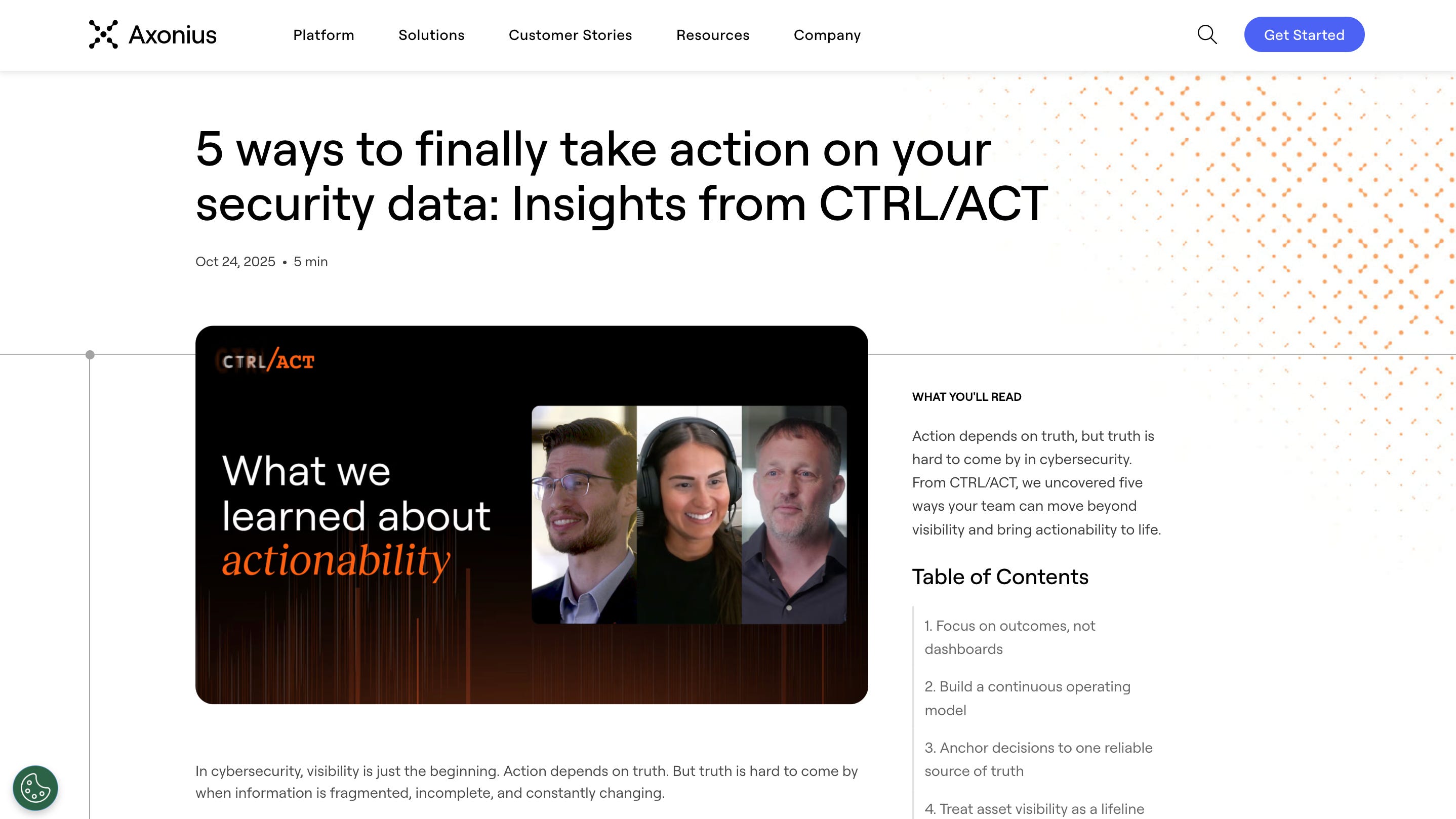
Where I see opportunity is discoverability. It’s challenging to find any info about the event when you start on the home page of the website. If Axonius plans to run another virtual event next year, there’s a prime opportunity to create a dedicated section under the “Resources” dropdown in the main nav. This would continue driving awareness of the event year-round and allow consumption of the 2025 event content to build interest (and eventually drive reg) for the 2026 event. You’re not just promoting an event. You’re building an evergreen asset that compounds value over time.
Exclusive CTRL/ACT Merchandise
Axonius deployed many thoughtful tactics to drive registration in a short timeframe, but one high-impact idea would have been exclusive merchandise tied to headliner Brendan Hunt. Imagine custom Axonius CTRL/ACT soccer jerseys signed by Hunt, offered to the first 100, 500, or 1,000 registrants depending on budget. This taps into scarcity bias, the psychological principle where people place higher value on things that are limited in availability. The feeling of exclusivity combined with not wanting to miss out on a once-in-a-lifetime offering creates urgency that goes beyond the event content itself. You’re not just registering for sessions. You’re securing something rare that connects to a figure people care about.
The Bottom Line
All this is to say: virtual events deserve more strategic attention from campaigns teams than they typically get. When they fall under your ownership, they’re not the consolation prize for when the team can’t afford an owned physical event. They’re a distinct tool that solves real problems around accessibility, reach, and participant choice.
What Axonius demonstrated with CTRL/ACT is that excellence in virtual event execution comes down to understanding your audience at multiple levels. It’s the psychology of host selection that creates different pathways to registration. It’s the execution details that signal you’re thinking holistically about the attendee experience. It’s the content architecture that serves people wherever they are in their journey with you.
Lauren frames it clearly:
“Every major activation we run ladders up to a strategic priority. CTRL/ACT wasn’t a standalone event; it was the amplification engine for our Fall product launches. Virtual events give us something unique in our campaign portfolio. They create a focused moment in time where we can concentrate attention, shape the narrative, and go deeper than we can in day-to-day content.”
That’s the insight: virtual events aren’t competing with other campaign formats. They’re serving a distinct strategic purpose that other formats can’t replicate.
None of these elements required revolutionary tactics. What they required was intention. They required treating the virtual event as a strategic campaign worthy of the same rigor you’d apply to a product launch or research report.
Going into 2026, if virtual events are part of your campaign portfolio, the question isn’t whether they can compete with physical experiences. The question is whether you’re building them with the same level of strategic thinking that Axonius brought to CTRL/ACT. Because when you do, virtual events stop being the thing you settle for and start being the thing that expands what’s possible.
Every week, I write about marketing campaigns in the cybersecurity software space that stand out strategically and/or have creative execution worth studying. And every quarter, I select three “Campaigns of the Quarter” where the marketers who led the campaigns receive a free, personalized Funko Pop. Yes, I’m serious. Here’s mine as proof:
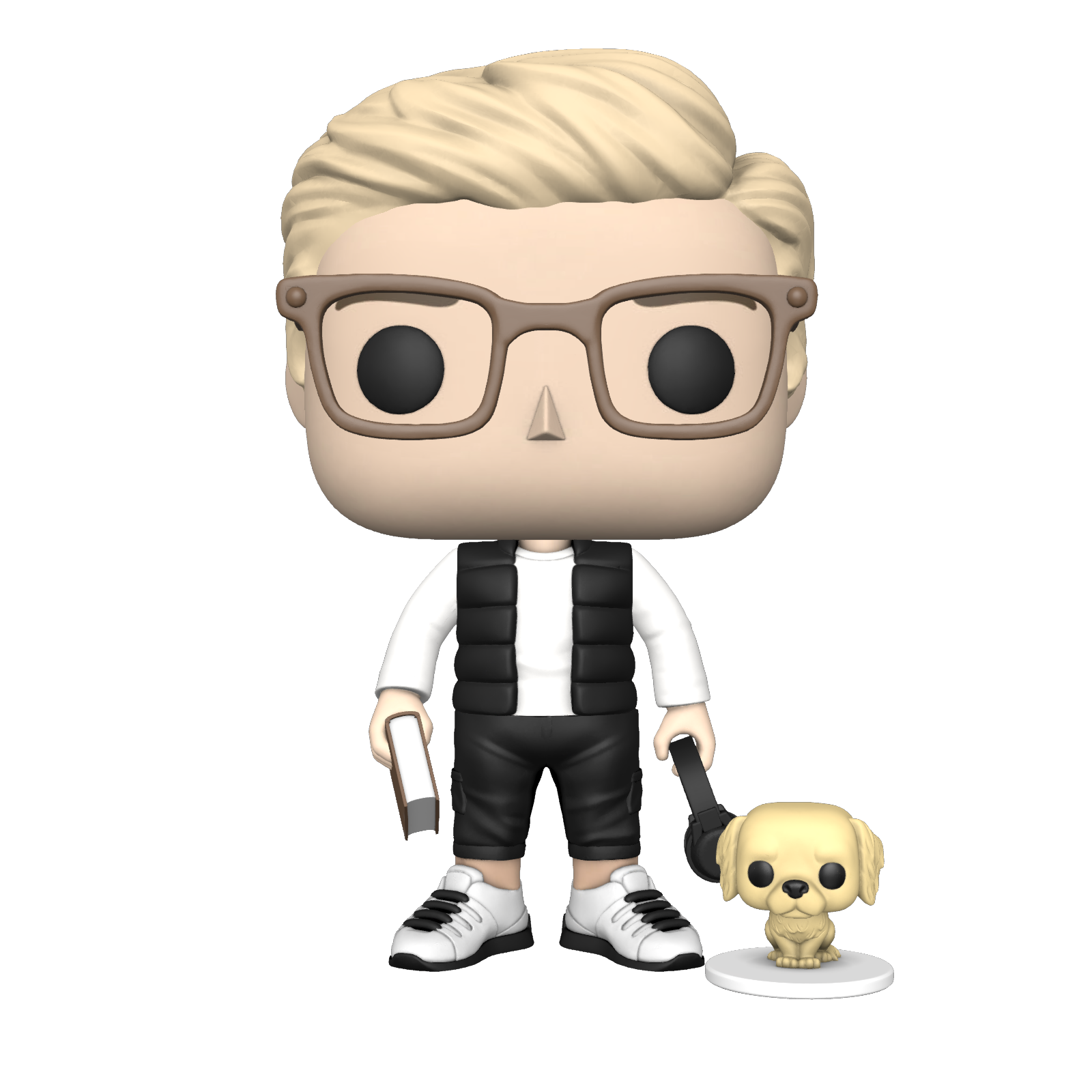
If you’ve led a campaign you’re proud of or know someone who has, message me on Substack or LinkedIn to submit it. I want to see what you’re building.
Originally published on Campaign Telemetry.
Read on Substack