Cohesity's Resilience Is Everywhere
A quick note: Everything I’m sharing here is my subjective take on Cohesity’s Resilience is Everywhere campaign as I’m not privy to their performance metrics or strategy. The recommendations at the end are offered with deep respect for the Cohesity marketing team and is purely a thought exercise in how I might have approached certain elements differently.
Many cybersecurity brand campaigns follow the same playbook: lead with fear, tell security leaders they are doing something wrong, position their company as the inevitable savior of the industry, and call it a campaign. But then there’s the handful of vendors who do it the right way.
Cohesity’s Resilience is Everywhere campaign is one of those.
Let me walk you through what they got right, what I’d push on, and why this campaign is worth studying regardless of what category you sit in the security software market.
Who is Cohesity?
Cohesity is an AI-powered data security company that helps organizations protect, manage, and recover their data in the face of cyber threats. Founded in 2013 and headquartered in San Jose, California, the company serves over 13,000 customers globally, including FedEx, United Healthcare, and the U.S. Air Force, and has established itself as a leader in the data security and management space.
At its core, Cohesity is in the business of making sure that when the worst happens, organizations can recover fast and keep moving.
First, Some Campaign Context
Resilience is Everywhere is a brand campaign built around a single, deliberate bet: that Cohesity can own the word resilience in the minds of security and IT leaders the same way certain vendors own “zero trust” or “observability.”
The campaign lives on a dedicated landing page, anchored by a 60-second hero video, and supported by a content ecosystem including their Global Cyber Resilience Report, customer video testimonials, analyst recognition, and related resources.
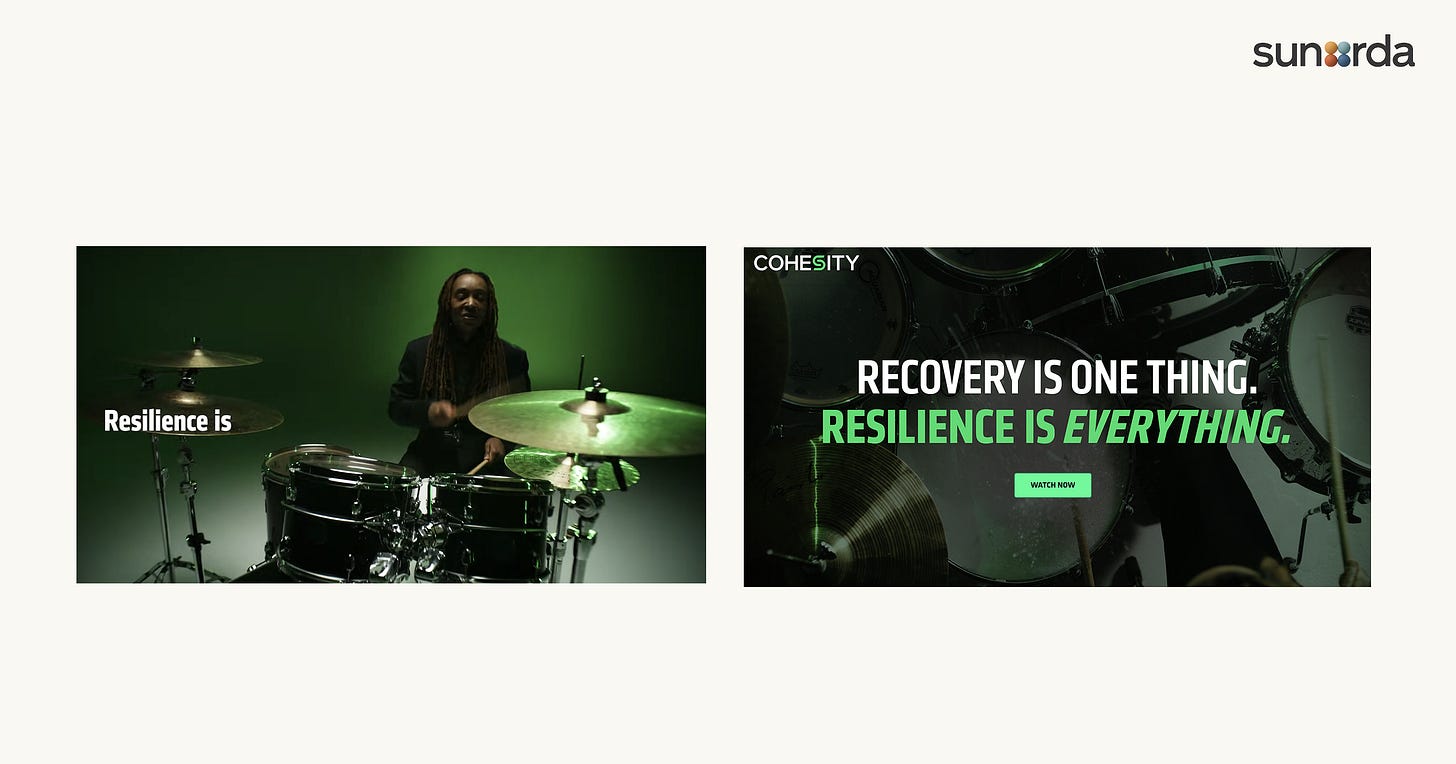
The creative theme runs through everything. Dark cinematic visuals, neon green brand energy, and a drum kit as the central metaphor. The choice of drums is deliberate. Drumming is relentless, rhythmic, and largely invisible to the audience until the beat stops. Nobody in the crowd thinks about the drummer when the music is flowing. They only notice when something goes wrong. That's exactly what it feels like to keep an organization resilient. The work is constant, the stakes are real, and most of the time nobody claps.
That’s the setup. Here’s what Cohesity executed brilliantly.
What Cohesity Nailed
A Landing Page That Actually Belongs
This sounds like a low bar. It isn’t. I’ve seen this mistake made more often than not: marketing teams invest heavily in a beautiful hero video or striking creative concept, and then they send people to a standard product page that shares no DNA with the campaign creative. The result is whiplash. The emotional thread snaps the moment someone clicks through.
Cohesity didn’t do that. The landing page and the video feel like they were built in the same room, by the same team, with the same brief. The neon green, the bold typography, the “recovery is one thing, resilience is everything” framing. It all carries through from the video into the page. That’s cognitive fluency at work.
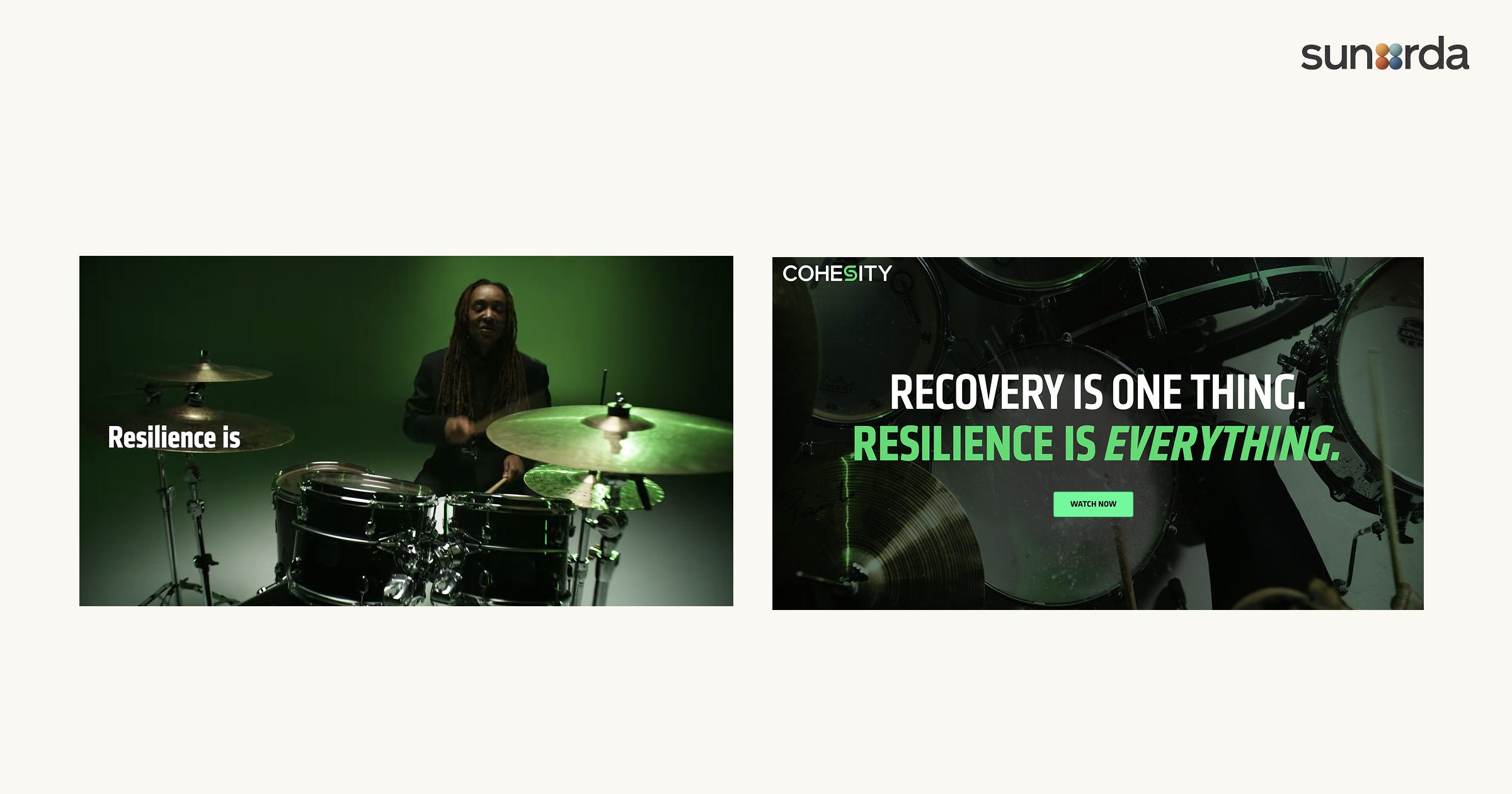
When every touchpoint feels visually and narratively consistent, the brain processes the experience more easily and trusts it more readily. Consistency isn’t just an aesthetic choice. It’s a psychological one. And when you get it right, the campaign doesn’t just live in a single asset, it compounds.
Video Reframes Resilience From A Technical Capability Into A Human Value
This is the campaign’s most important creative decision, and I don’t want to breeze past it.
The majority of security software vendors operate from the same assumption: cybersecurity equals technical controls and technology. Buy the right tools, configure them correctly, and you’re protected. That framing puts the product at the center of the story. Cohesity’s video does the opposite.
In 60 seconds, it never shows a single product screen or dashboard. Not one. Instead it shows people. The woman working late at her desk. The man hunched over his laptop at midnight. The security practitioner still on call from the couch while his family moves around him in the background.
The copy narrates their reality: “Where business hours end, but responsibility continues.” “Built through quiet grit, repeated in endless motion.” “Being ready for the midnight alert and trusted in the morning review.” “It’s not always noticed. It’s the need to protect.”
That last line is where the emotional gut punch lands. Cohesity is acknowledging something most vendors never touch: The invisibility of doing this job well. If nothing goes wrong, nobody claps. By saying "we see it," Cohesity positions itself not as a vendor selling a product but as a partner that genuinely understands the weight of the work. That's self-concept theory in action. People gravitate toward brands that reflect who they want to be, and security leaders want to see themselves as the hero protecting the business, not as the person who missed something. Cohesity meets them exactly there.
The "Every" Sequence Earns The Campaign's Title
Toward the end of the video, Cohesity runs a sequence: “Every second. Every person. Every team. Every alert.” Each line is paired with a different pair of feet. Dress shoes in a boardroom. A toddler taking steps in a playroom. Green sneakers under an office desk. Black shoes on a bathroom tile floor.
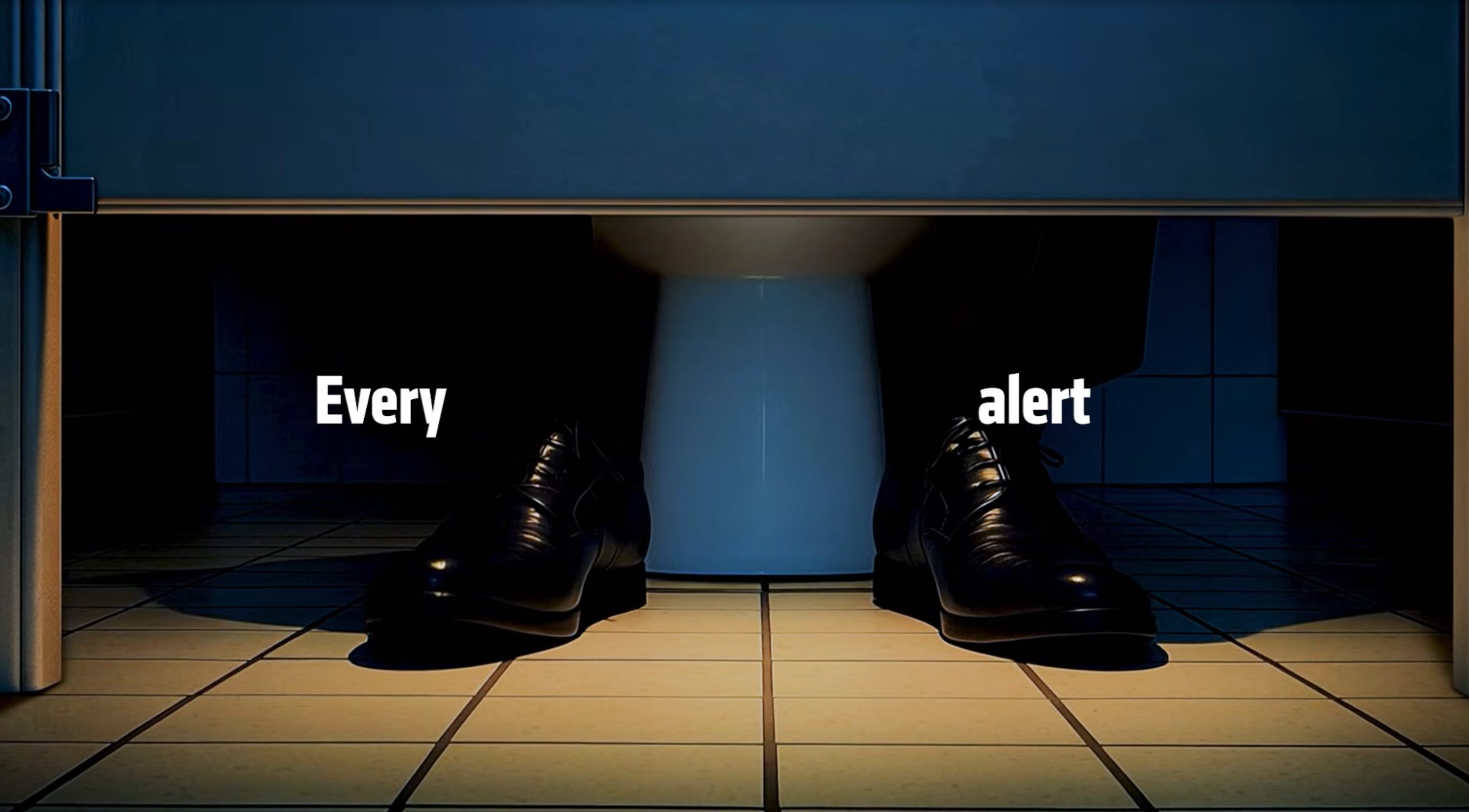
This is anaphora, the rhetorical device of repeating a phrase at the start of successive clauses to build rhythm and emotional momentum.
It’s a technique with roots in some of the most memorable speeches and writing in history, and Cohesity deploys it with real craft. The feet are anonymous. No faces, no job titles. Just people. The message lands as: resilience isn’t a CISO thing or a security team thing. It touches everyone, everywhere. That’s how they make “Resilience Everywhere” feel earned rather than just a tagline slapped on a campaign.
“Resilience has its heroes.” Section Lifts The Buyer Up
“Resilience has its heroes. Every day, everywhere.” Paired with the copy: “We know that behind every recovery, there’s a resilience hero. We are with you, every step of the way.”
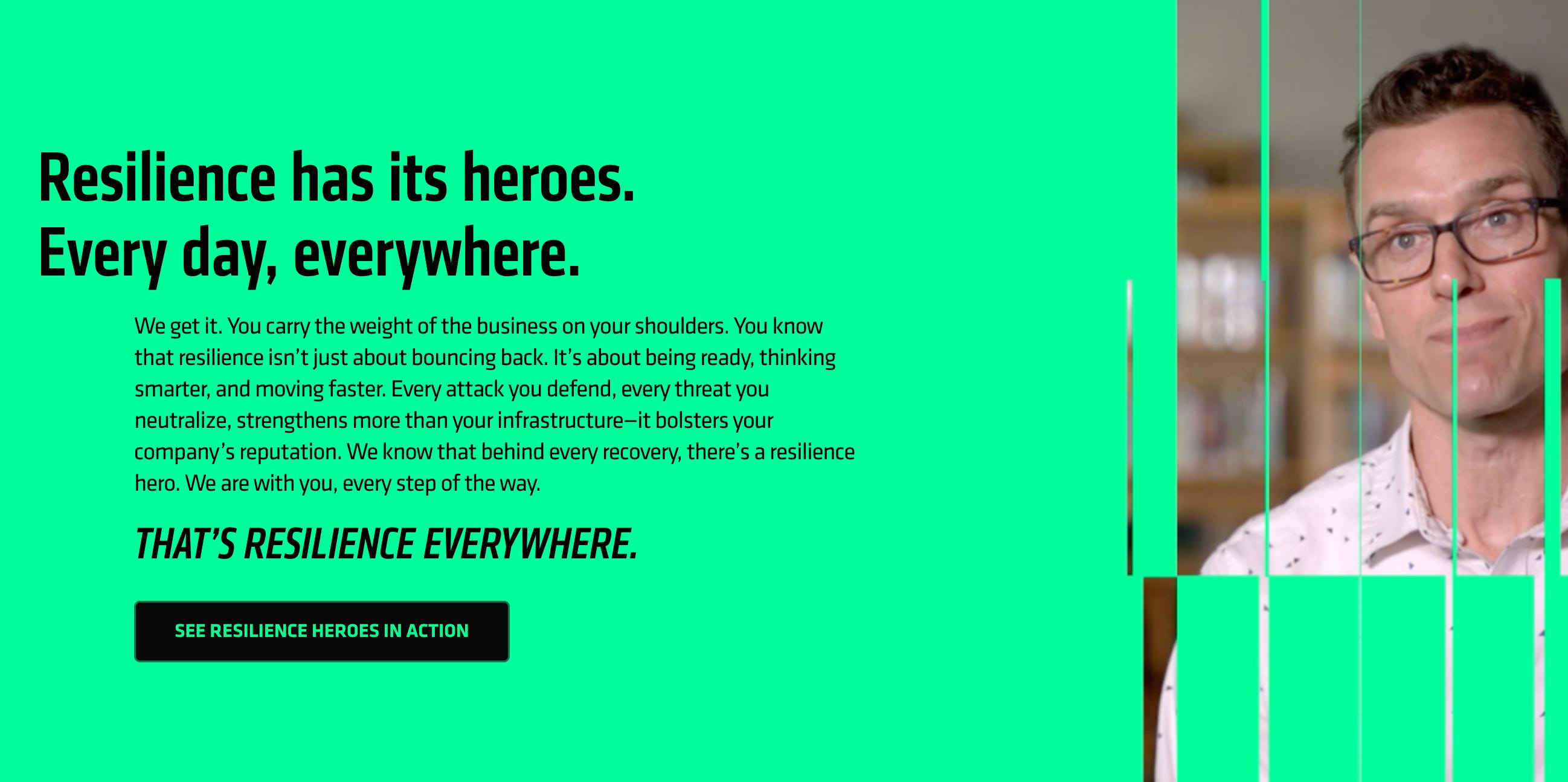
This is not how most security vendors open a conversation. The industry default is urgency through inadequacy… you’re behind, you’re exposed, you’re not doing enough.
Cohesity leads with the opposite. They open by celebrating the practitioner. And the CTA button that follows, “See Resilience Heroes in Action,” extends the hero narrative directly into the click. That’s not a coincidence. It’s a commitment to a consistent identity that carries from the headline through to the destination, where real customers speak to the emotional and operational weight of resilience in their own words.
Most creative CTAs overpromise and underdeliver. Here the promise and the payoff are perfectly aligned, which quietly but powerfully reinforces trust.
What I Might Have Explored Differently
The landing page loses its narrative thread after the first two sections.
Let me be clear: the opening is excellent. “Recovery is one thing. Resilience is everything” plants a bold philosophical stake. “Resilience has its heroes. Every day, everywhere” deepens it by centering the practitioner as the protagonist. Those two sections flow together and you feel the story pulling you forward.
And then it stops.

“Are you risk-ready or risk-exposed?” is solid copy on its own, but it doesn’t feel like the next beat in the story that just started. It pivots abruptly into a diagnostic frame without any narrative bridge. Then the 5 S’s feel like a product one-pager was dropped in. Then the customer logo wall. Then customer videos. Then analyst recognition. Then related resources. Each section is individually defensible, but none of them build on each other. The emotional momentum the first two sections created just dissipates. What starts as a campaign experience becomes a series of billboards.
The irony is that Cohesity clearly has the creative discipline to tell a sequential story.
We know this, the video proves it. The video has a real narrative arc. It builds, escalates, and resolves. The landing page just doesn’t apply that same thinking to its structure beyond the first fold. It feels like the brand team owned the top and then handed the rest off to product marketing and demand gen to fill in without a shared through line to connect it all.
To be completely fair, rebuilding a full landing page narrative is HARD. And we don’t know the turnaround time the team had to execute this. Also, there’s a reasonable argument that each section is targeting a separate stage of the buyer’s journey; the report for top-of-funnel, the customer videos for middle-of-funnel, the analyst recognition for bottom-of-funnel. That’s foundational demand gen thinking. But the execution doesn’t hide the seams. The most effective campaign landing pages manage to serve multiple audience needs while still feeling like one coherent story. This one doesn’t quite get there.
If I were advising the team, I’d push for connective tissue between sections. Short transitional copy that carries the hero narrative forward and frames each subsequent section as the next chapter in the resilience story rather than a standalone module. The bones are there. The storytelling just needed to go one layer deeper.
The Bottom Line
Cohesity’s Resilience is Everywhere campaign is a strong piece of work. It makes an emotional argument in a category that almost exclusively makes rational ones. It centers the human being doing the work instead of the technology enabling it. And it makes a clear brand bet that the word resilience should belong to Cohesity. Not because they said so, but because they built a story around it worth believing.
The landing page has room to grow, and there are execution gaps worth addressing. But the creative foundation is solid. And in a market where most campaigns blur together by the time you close the tab, solid counts for a lot.
Great work Cohesity marketing team. Happy March Madness everyone. We’ll see you next week!
Every week, I write about a marketing campaign in the cybersecurity software space that stands out strategically and/or has creative execution worth studying. And every quarter, I select three “Campaigns of the Quarter” where the marketers who led the campaigns receive a free, personalized Funko Pop. Yes, I’m serious. Here’s mine as proof:
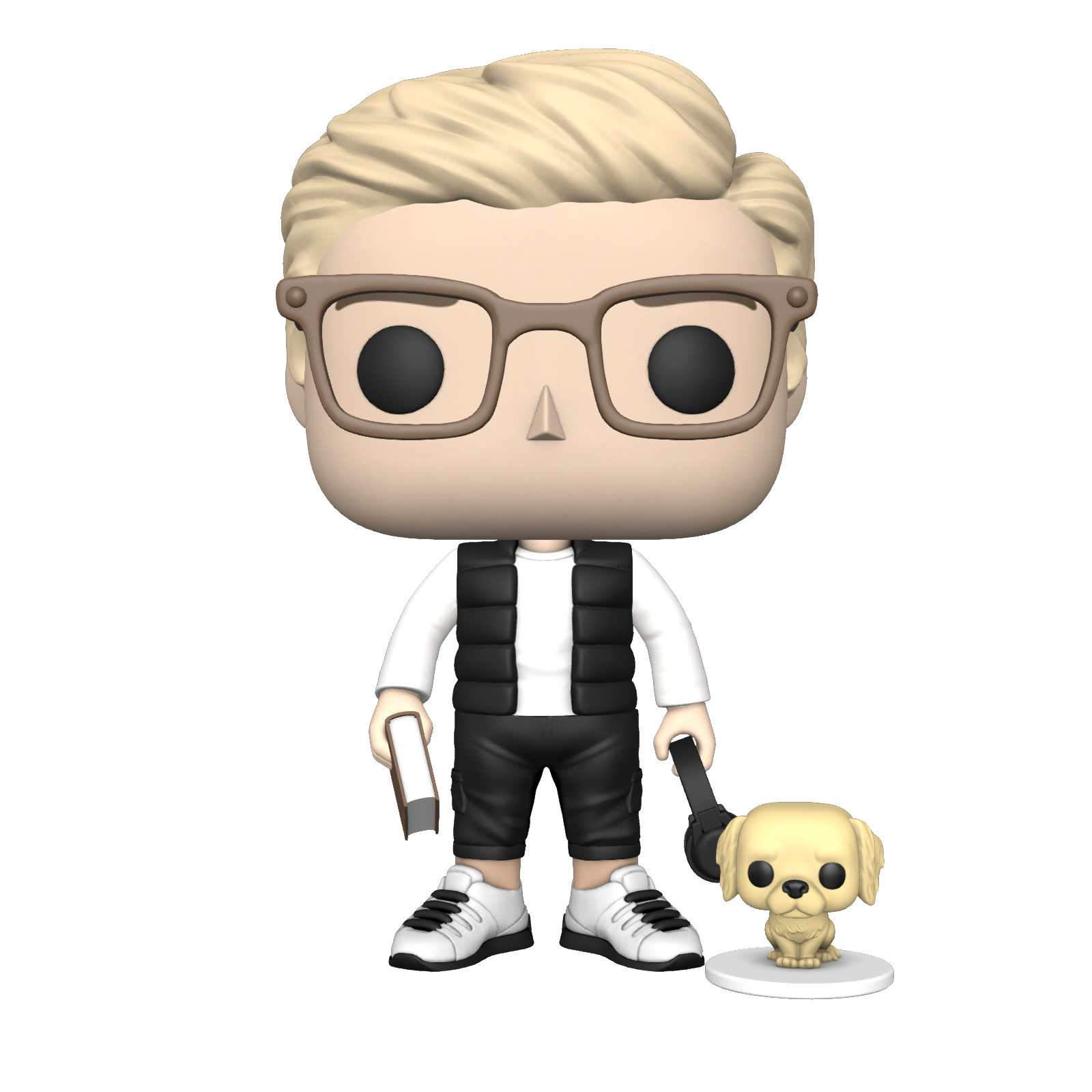
If you’ve led a campaign you’re proud of or know someone who has, message me on Substack or LinkedIn to submit it. I want to see what you’re building.
Originally published on Campaign Telemetry.
Read on Substack