NinjaOne's Beat IT Misery
A quick note: Everything I’m sharing here is my subjective take on NinjaOne’s Beat IT Misery campaign as I’m not privy to their performance metrics or strategy. The recommendations at the end are offered with deep respect for the NinjaOne marketing team and is purely a thought exercise in how I might have approached certain elements differently.
For those who don't know them, NinjaOne is an Unified IT Operations Platform. They help IT teams and MSPs manage, patch, secure, and support all the devices across an org from a single place.
And if you want to understand why this campaign exists, the landing page gives you the answer directly: 68% of organizations use at least 11 tools for endpoint management and security. That sprawl is the problem NinjaOne is solving, and the central promise of this campaign is that they replace the chaos of managing all of it with something calmer.
It Started With Something A Customer Actually Said
The best campaigns rarely start as a clever idea in a meeting. This one started with a sentence. An IT professional at a well-known sports organization told NinjaOne:
“If it weren’t for NinjaOne, especially its built-in automation, my job would be absolutely miserable.”
That quote stuck with the team. But here’s the part I want us to sit with. They didn’t run with it on instinct.
As Morgane Le Marchand, Director of Marketing at NinjaOne, put it:
“We decided to cross-reference the sentiment with our broader Discord and G2 customer communities. Fortunately, the same themes kept showing up.”
IT teams universally stretched thin. Too many tools. Too many fires. Wearing too many hats. A permanent state of reactivity. One G2 reviewer put it plainly: “NinjaOne has eliminated many of our daily IT frustrations.”
Beat IT Misery, in Morgane’s words, “let us acknowledge all of this pain directly. It allowed us to connect deeply and empathetically to our community, while using the moment to showcase our platform offerings and propose a better path forward.”
I want to call out how rare this is, because it's the foundation everything else is built on. In my experience, campaigns are typically a good idea in a meeting that gets transferred to a brief and into production without ever being validated against what customers actually feel.
The idea sounds great in the room, so it ships. NinjaOne slowed down and operated with maturity and intention. They started with a real quote, pressure-tested the sentiment against two different customer communities, and only then committed. That research discipline is the unglamorous reason the creative lands as true rather than clever. You can feel the difference in the campaign video, even if you never knew the customer quote existed.
The Best Marketing Doesn't Feel Like Marketing
Let me start with the campaign video by telling you something I experienced watching it, because it taught me something I keep relearning.
I generally recommend building a one-minute video with 30-second and 15-second cutdowns for different channels. This film is a minute and a half. And when it ended, I found myself double-checking the runtime, because there was no way that was 94 seconds. It didn’t FEEL like 94 seconds.
There’s a name for what happened to me. It’s called narrative transportation. When a story is built well enough that the audience becomes absorbed in the world rather than evaluating it from the outside, their sense of time distorts and their critical defenses drop. I wasn’t watching an ad and counting the seconds. I was following a guy through a brutal morning.
The fact that I had to fact-check the runtime afterward is the strongest evidence the transportation worked.
This is worth holding onto as a directive, not just an observation. The best marketing doesn’t feel like marketing. Our number one job is to create something that is enjoyable to consume. NinjaOne earned 94 seconds of attention by making me forget I was spending it. Too many campaign videos fails right here, because it never gets the viewer to stop watching the clock.
The IT Misery Index
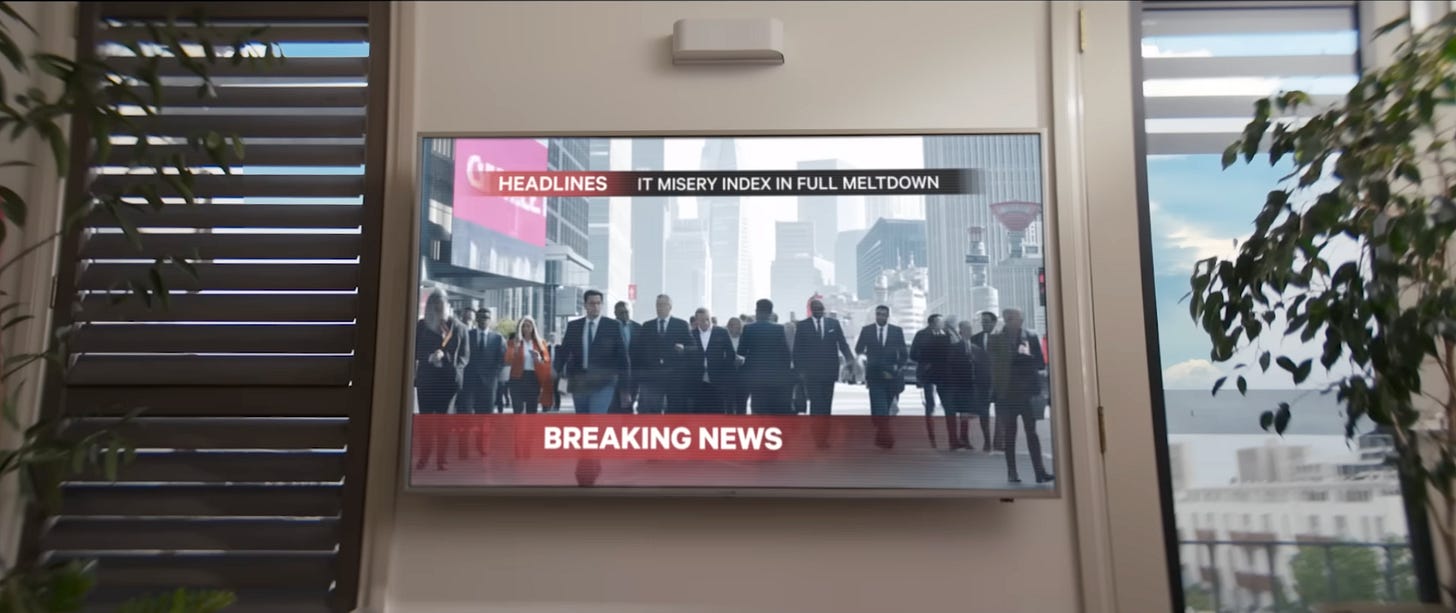
The video opens as a mock news broadcast. An anchor reports, with full gravity, that the “IT Misery Index” is in “full meltdown,” with reports of technical difficulties, low productivity, and employee burnout pouring in from offices all over the world.
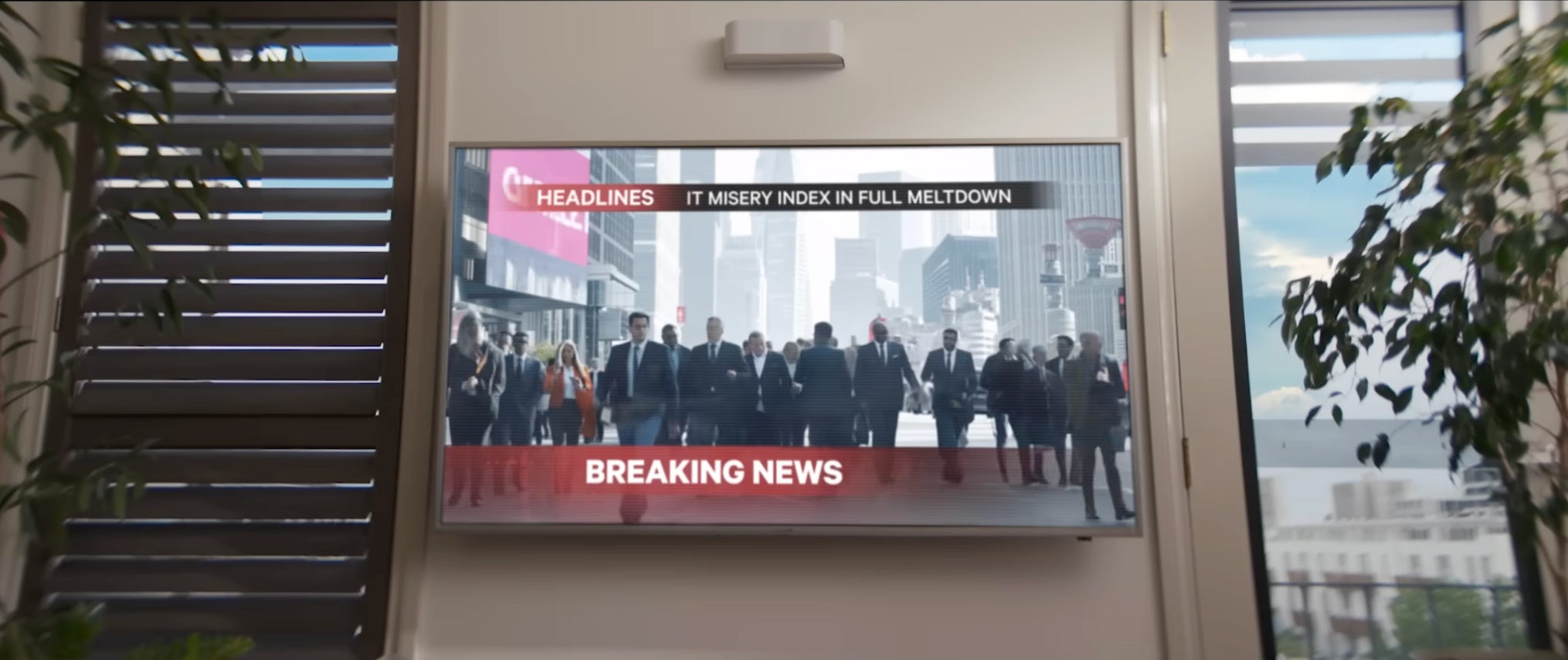
I love this!
The security industry is drowning in metrics, and inventing a fake one is a sharp way to cut through. A real metric makes you process and evaluate. A fictitious, faintly absurd one borrows the entire visual grammar of authority, the breaking news chyron, the “in full meltdown” ticker, the desk counter, and redirects it toward something human. That’s benign violation theory at work. The “IT Misery Index” violates your expectation of what a news broadcast reports on, but it does so without any threat, so the result is a smile instead of confusion. And because it’s dressed in the costume of a serious indicator, it sticks the way a real metric never would.
Two People, Same Morning, Different Software
Here’s the structural choice I personally think is the most strategically important thing the film does. Most campaigns in cybersecurity pick a lane.
Lane 1: They sell fear (here’s the breach waiting to happen)
Lane 2: They sell aspiration (here’s the serene future)
NinjaOne ran both through a single device: two people in an elevator. One is visibly drowning, phone buzzing with panic, ready to call in sick. The other is calm, composed, holding her iced coffee. Same job. Same morning. Different software.
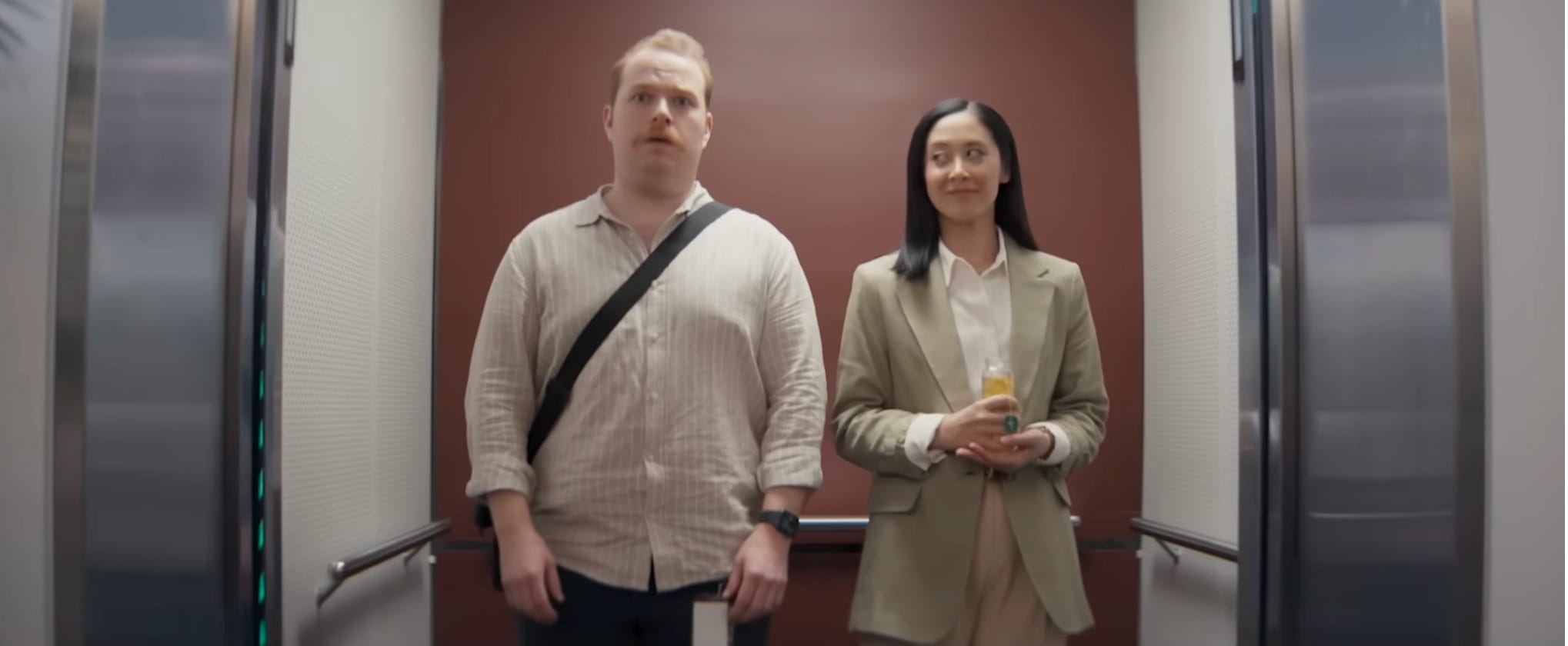
That contrast does the persuasive work because it dramatizes the stakes of the choice rather than describing them. It’s the difference between telling someone IT can be better and letting them feel the gap between two versions of the same Tuesday. Showing both the chaos and the calm, side by side, in the same frame, is what makes the promise land.
Comedy That Carries The Message
The chaotic office scene is a small masterpiece. A man stands on a desk hurling papers into the air. A woman screams “what do you mean there’s no backup” into a phone. Someone rages at a printer. An employee asks, panicked, “what the hell is a patch?”
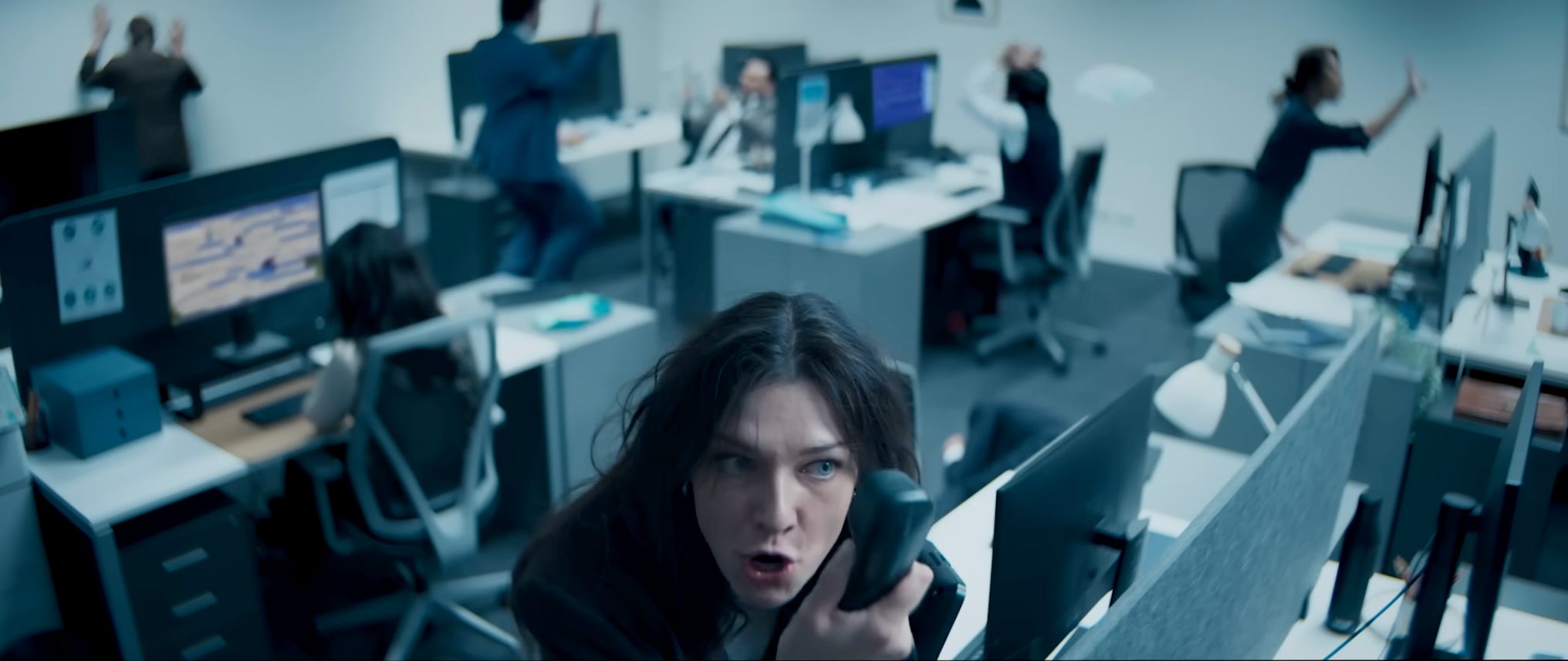
What makes it land is that the comedy is load-bearing, not decorative. Every gag maps to a real category of pain: data loss, ticket volume, patching, monitoring, incident response. The humor isn’t a break from the message. The humor is the message. That’s exactly why it works, and exactly why most attempts at funny B2B fall flat. They bolt jokes onto a pitch instead of building the pitch out of the jokes.
The Details That Reward Attention
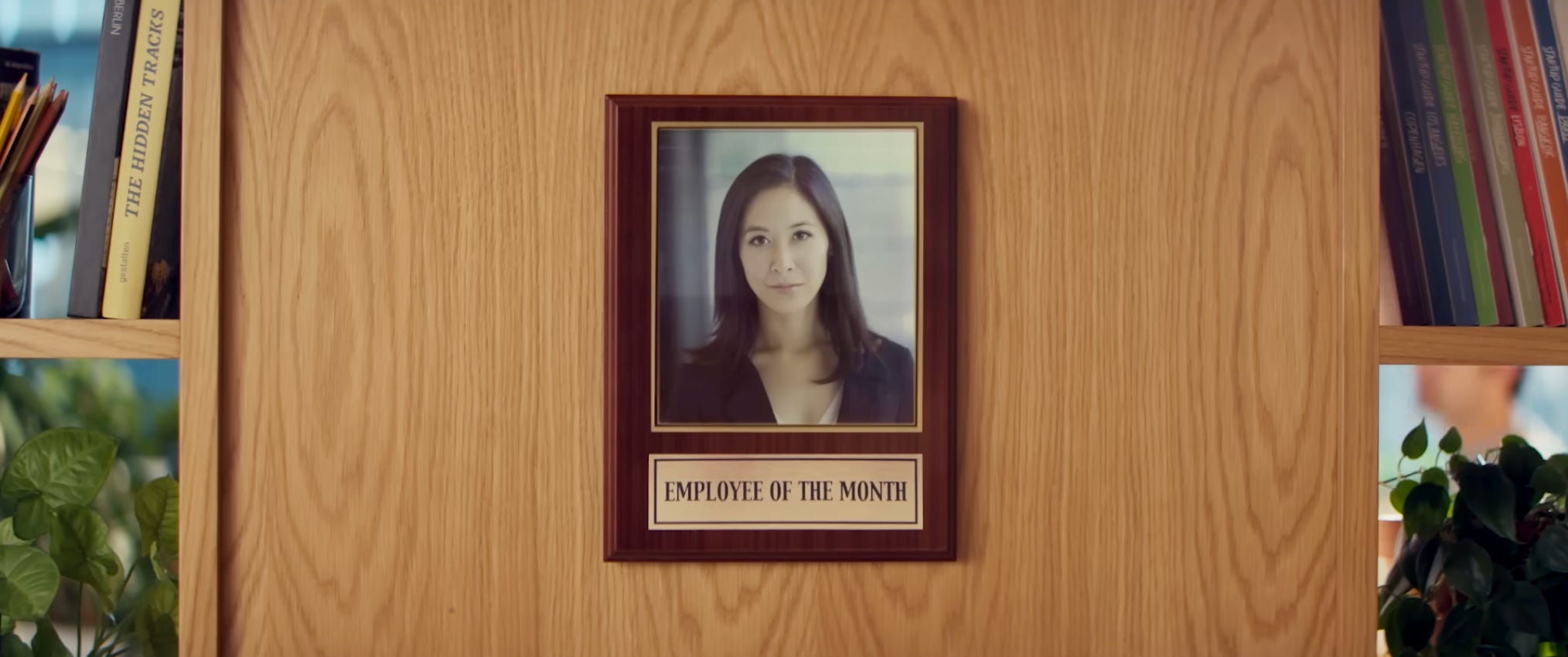
There are small touches that don’t announce themselves. The “0 Days Since Last IT Incident” counter that later reads “400.” The “Employee of the Month” plaque. These are rewards for the viewer leaning in, and they deepen the transportation rather than interrupt it.
This reminds me of iconic Ogilvy quote:
“The consumer isn’t a moron, she is your wife.”
NinjaOne trusted the audience to catch these without a spotlight, and that trust is a form of respect the marketers watching will feel.
They Told You Exactly What They Do
Here’s the line that saves the campaign from being merely entertaining:
“It makes managing, patching, and supporting all our endpoints easy.”
I’ve studied plenty of campaigns so committed to brand and emotion that you walk away charmed but unable to say what the company actually does. “We secure you so your company stays safe.” Okay, but what security category do you play? NinjaOne spent 80 seconds earning attention and then spent one clean sentence telling you precisely where they operate.
The sequencing is the lesson. Emotion first, specificity second. They didn’t open with the endpoint management claim. They earned the right to make it.
A Few More Things The Video Does Quietly
“Wait, are you hiring?” is a such a beautiful little wink. The calm employee isn’t just productive, she’s somewhere people want to work. For a category where burnout and talent retention are constant pain points, that line quietly says NinjaOne doesn’t just satisfy a security control, it makes your team a place people don’t flee.
And notice who delivers the good news.
It isn’t a narrator or a product demo. It’s one practitioner telling another in an elevator. Security and IT buyers trust practitioners over vendors, and Morgane and team knows it. The most persuasive voice in the room is the colleague who’s already living the better version. That’s social proof in its most native, least salesy form.
As Bill Bernbach put it:
“Nobody counts the number of ads you run; they just remember the impression you make.”
NinjaOne made an impression first and a claim second, and that order is the reason it works.
The Landing Page Continued The Story
Great creative deserves a destination that continues the story, and too often it gets dumped onto a homepage or product page where its momentum dies at the door.
NinjaOne built a dedicated campaign page, and boy did they deliver.
The campaign video plays as the hero background, so the page feels like a continuation rather than a separate place. Someone say cognitive fluency. You arrive carrying the visual and tonal memory of the film, and the page immediately matches it.
There’s no re-orientation tax. Your brain processes the page as more of the thing you were just enjoying.
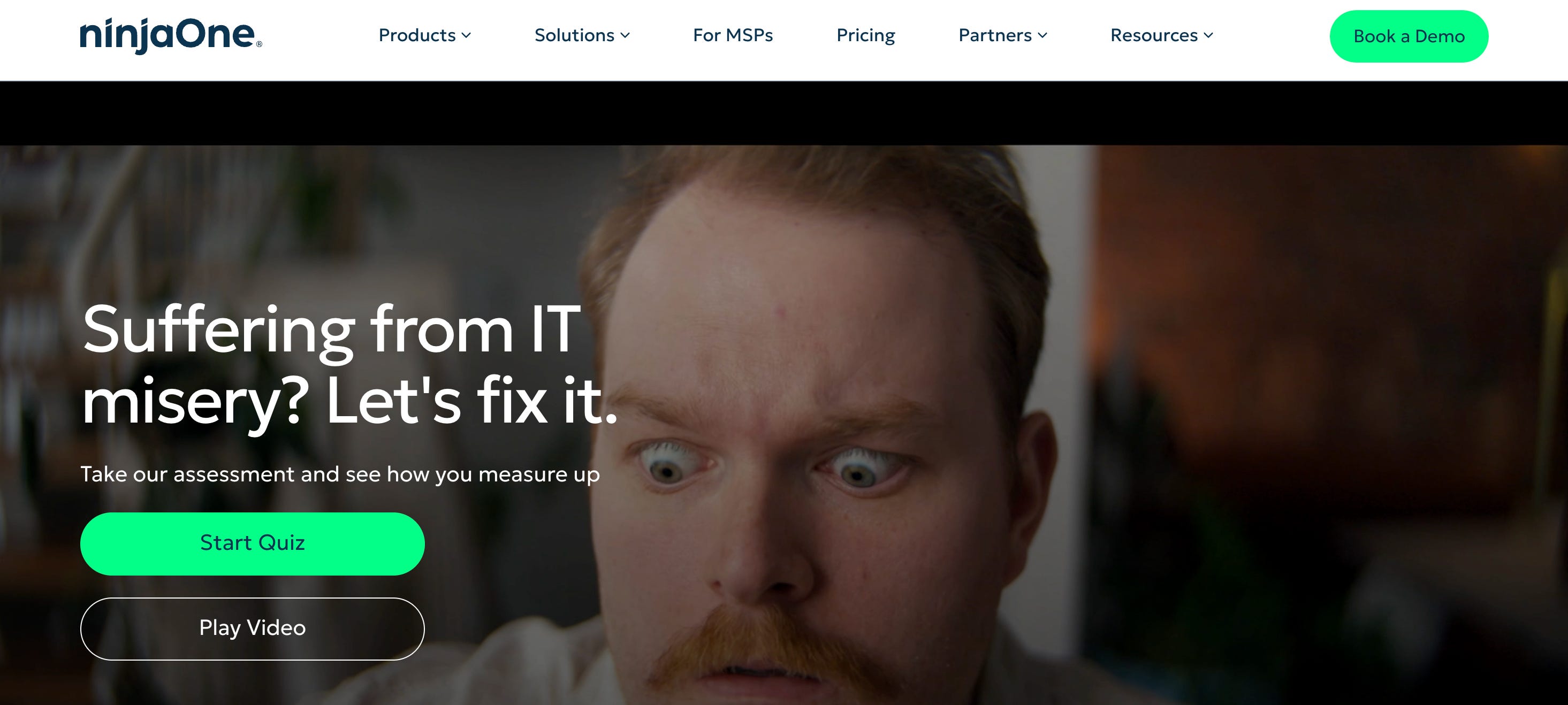
The “Where does IT misery come from” section does the same thing the film did. It earns attention with emotion, then cashes it in for specificity. Three named sources, each with a real statistic, each mapping to a NinjaOne capability. And the campaign’s language, “IT misery,” “antidote,” “chaos,” the misery faces, the green, persists across every inch of the page. Repeated exposure to the same language builds familiarity, and familiarity reads as credibility.
The CTA That Has Me Cheesing From Ear-to-Ear
Here’s one of my favorites parts of the page.
Instead of leading with “Schedule Demo,” NinjaOne led with a unique offer built for this campaign: the IT Misery Index Assessment.
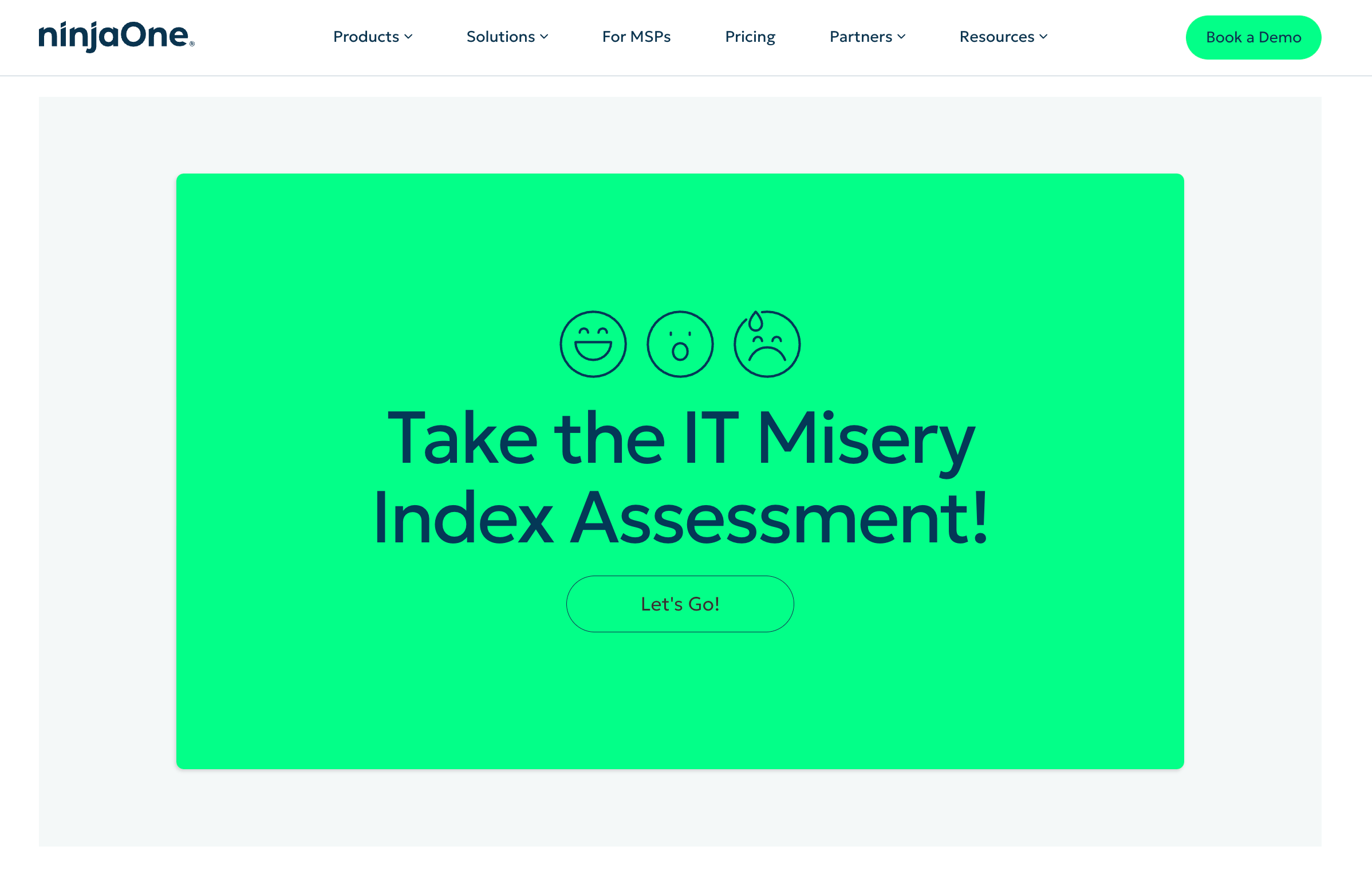
This reflects an understanding of where the prospect actually is.
As Morgane explained, the campaign was deliberately designed for top-of-funnel audiences, “people who may not know NinjaOne yet, but absolutely understand the feeling of being overwhelmed, under-resourced, and under-appreciated in their IT role.” The goal of the page was to validate that feeling, not to pitch. In her words:
“We wanted visitors to experience the campaign without feeling like they’d walked into a sales funnel.”
Someone who just watched a 94-second video is not ready to talk to sales. The assessment is a low-commitment, high-curiosity offer that lets the prospect take a baby step, and that step does something a demo request can’t. It gets the prospect to self-diagnose. By the time they see their score, they’ve personally generated the evidence that they have a problem.
That’s the IKEA Effect applied to lead gen. People value a conclusion more when they helped build it. A prospect who scores their own misery is far more primed for a demo than one asked to book it cold.
And here’s another part that had me excited. The assessment is ungated. No form fill. Morgane was candid that this wasn’t an obvious call internally: “there was some internal debate on going with an ungated content asset, some were worried about leaving leads on the table, but we intentionally prioritized engagement over lead capture.” That’s the organizational courage that separates good campaigns from great ones. It’s easy to gate an asset and harvest the emails. It’s harder to trust that an ungated, useful experience will pay off down the funnel.
NinjaOne made the harder, righter call.
The page doesn’t stop at one door, either. You can play the video, take the assessment, download the guide, watch a demo, or start a free trial. Most campaign pages pick a single conversion goal and let everyone not ready for it bounce. NinjaOne built a staircase, where each step asks for slightly more commitment and offers slightly more value in return. The “Top 10 Ways to Reduce IT Misery” guide is part of that staircase. It shows NinjaOne was thinking carefully about meeting buyers at different stages of the journey rather than forcing everyone toward the same action.
One more thing on the page. The “Join the Happy NinjaOne Community” section extends the peer-to-peer logic of the film.
The deeper move is that the entire campaign is architected around proof from practitioners, not claims from the vendor. The film resolves through one colleague telling another. The page resolves through “thousands of IT teams” and named customers. The throughline never wavers. The most persuasive voice is never NinjaOne. It’s someone who already escaped the misery.
What I Might Have Explored Differently
The IT Misery Index Assessment is a beautifully crafted offer. The ten questions map directly to the pain the film just dramatized: device visibility, patching frequency, backup reliability, incident resolution time. Every question is a mirror held up to the same misery the protagonist was drowning in.
The concept is strong. The design is where it slips.
The rest of the campaign operates at a high creative level. The film is cinematic. The landing page is clean and confident. The guide has a considered visual system.
Then the assessment arrives as five emoji faces on a green rectangle, and it doesn’t carry the weight of what surrounds it. It reads like it was built from a brief that said “keep it light” without anyone checking whether “light” was doing the same work here that “cinematic and precise” was doing everywhere else. When you’ve built 94 seconds of narrative transportation, the interactive follow-up needs to hold that standard. This one doesn’t quite get there.
The good news is the concept is strong enough that the execution gap doesn’t sink it, but it’s the one place the campaign’s quality dips below its own bar.
The Thing That Excited Me The Most
Here’s what I want to leave you with.
Beat IT Misery launched in February 2025. But NinjaOne didn’t move on. They turned the campaign into a creative container and kept living inside it. Webinars branded “How to Overcome IT Misery by...” with the rest of the title dedicated to the problem a specific product line solves. Product videos for patch management, remote access, and backup, all built with the same character, the same world, the same tone.
And this was no accident.
I asked Morgane whether the extension was always the plan or a reaction to the launch going well. Her answer:
“Extending the campaign was always the plan.”
They went into launch with a multi-quarter roadmap, having tested the concept through internal reviews, customer panels, and feedback from IT industry leaders. The strong launch reception validated the bet, but the bet was placed long before. As she described it, each subsequent video “took place in the same Beat IT Misery world with our hero character, an IT professional navigating the nuanced challenges of his career, with NinjaOne helping him solve each new problem he encounters. That continuity was intentional. It transformed individual product videos into chapters of a larger story.”
Chapters of a larger story. That’s exactly it, and it’s the part many of us miss, so I want to be precise about why it matters.
Most orgs treat campaigns as discrete events.
You launch, you measure, you move on. The next campaign arrives with a new concept, new visual language, new character, and the audience has to rebuild context from scratch every time. From the inside, that feels like a refresh. From the outside, it feels like channel surfing.
But your prospects and customers don’t experience your campaigns as separate projects with start and end dates. They experience them as one cumulative impression of what your brand stands for. When you change the creative container every quarter, you aren’t refreshing the brand. You’re resetting it. Every reset throws away the context you spent the last campaign building.
NinjaOne chose to compound instead.
The Bottom Line
Beat IT Misery is a video good enough to make you forget you’re watching marketing, wrapped in a campaign architecture that meets buyers at every level of intent, anchored to a single sentence that tells you exactly what NinjaOne does. Any one of those would make it worth studying. Together they make it a campaign most teams should be jealous of.
And it kept traveling.
NinjaOne brought the campaign into the physical world with OOH advertising at major trade shows, and activated their community by awarding “IT Misery Task Force” coins to people who shared their most creative ways to destroy a printer, a frustration anyone who has worked in IT understands in their bones. A campaign that started with one customer’s offhand comment ended up as OOH at trade shows and a community ritual around printer destruction. That’s the full arc of a creative idea given room to compound.
But the lesson I’d carry out of it isn’t about the film, or the trade show booths, or the coins. It’s about what came after the launch. NinjaOne understood that the campaign wasn’t an event, it was a container, and that the value of a great creative idea isn’t spent at launch. It’s compounded every time you choose to build the next thing inside it instead of starting over.
That’s the discipline. Don’t move on from your best work. Live inside it.
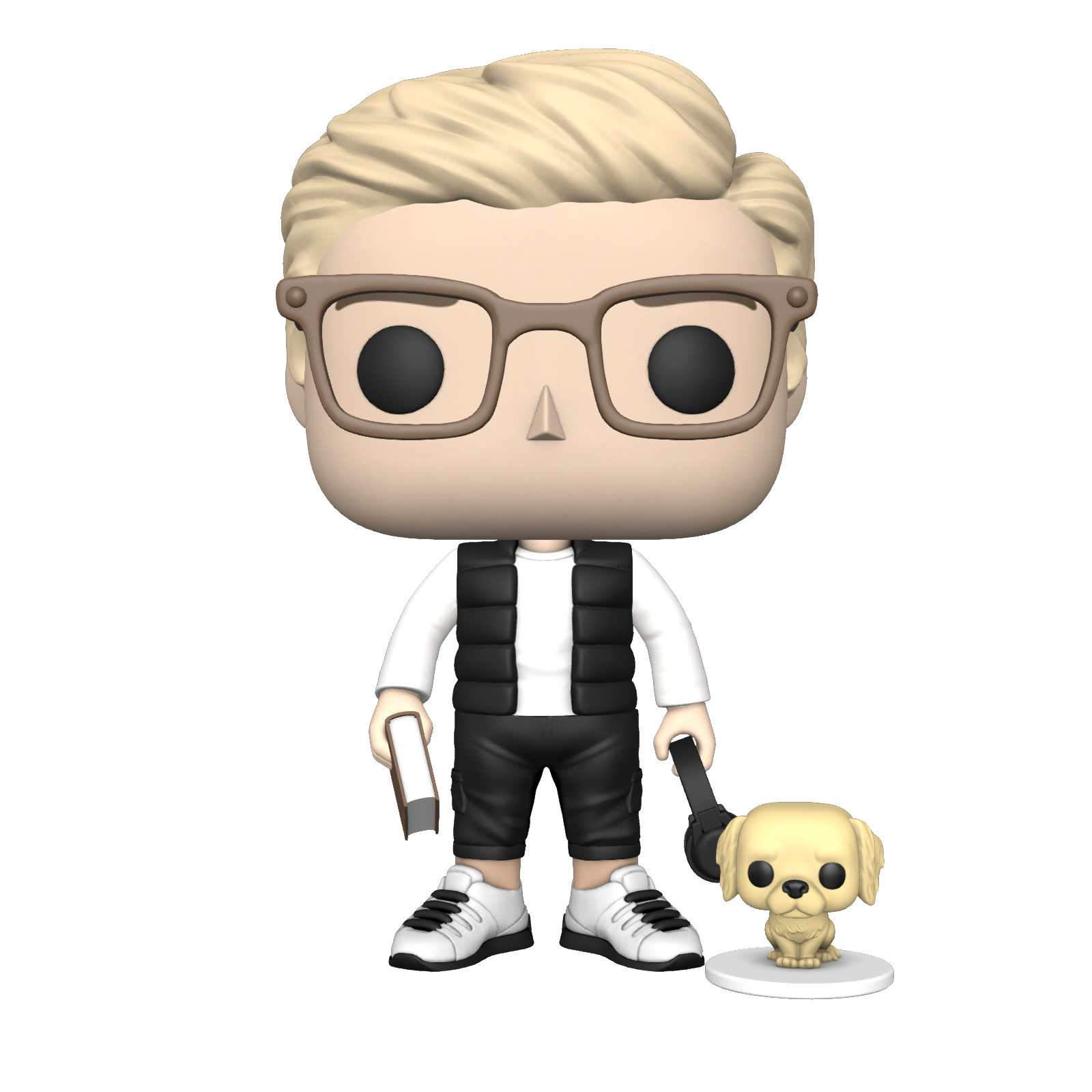
Every week, I write about a marketing campaign in the cybersecurity software space that stands out strategically and/or has creative execution worth studying. And every quarter, I select three “Campaigns of the Quarter” where the marketers who led the campaigns receive a free, personalized Funko Pop. Yes, I’m serious. Here’s mine as proof:
If you’ve led a campaign you’re proud of or know someone who has, message me on Substack or LinkedIn to submit it. I want to see what you’re building.
Originally published on Campaign Telemetry.
Read on Substack