SentinelOne's The Cybersecurity Breach That Never Was
A quick note: Everything I’m sharing here is my subjective take on SentinelOne’s The Cybersecurity Breach That Never Was campaign as I’m not privy to their performance metrics or strategy. The recommendations at the end are offered with deep respect for the SentinelOne marketing team and is purely a thought exercise in how I might have approached certain elements differently.
Now, let’s talk about SentinelOne’s The Cybersecurity Breach That Never Was.
A Quick Word on SentinelOne
SentinelOne is a publicly traded cybersecurity company founded in 2013. They specialize in AI-driven endpoint, cloud, identity, and data security, and are best known for their autonomous threat detection and response platform, which uses machine learning and behavioral AI to identify, prevent, and remediate attacks in real time without heavy human intervention.
Their Singularity platform is widely used by enterprises to protect devices, servers, cloud workloads, and networks from ransomware, malware, and advanced persistent threats (APTs). They have built their reputation around automation, AI-powered security operations, and rapid incident response.
The Campaign in Context
In October 2025, SentinelOne launched The Cybersecurity Breach That Never Was, a brand campaign anchored by a single 30-second video and a dedicated landing page.
The creative premise is built around an absence.
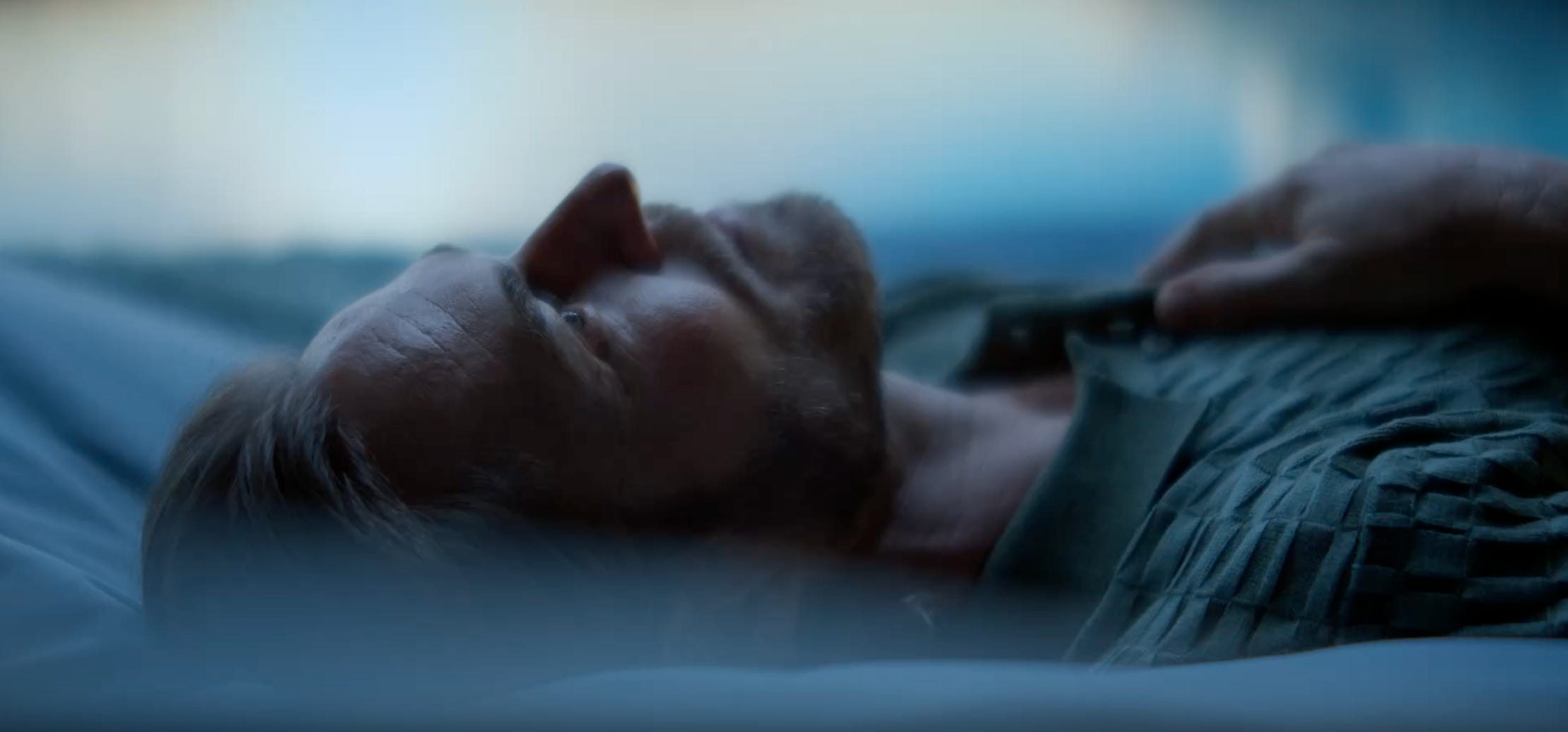
The protagonist wakes up calm. He looks out at a still lake. A woman rides a quiet train through a normal city. A baby sleeps peacefully on a monitor. The voiceover names what didn’t happen: no systems crashing, no flights grounding, no cities going dark.
The breach never came.
It’s a solid creative idea. In a category where the default move is to crank up the fear and show the dashboard, SentinelOne went the other way. They chose to dramatize the value of security software the way the buyer actually experiences it on a good day, which is silence. As a normal morning. As a baby that sleeps through the night.
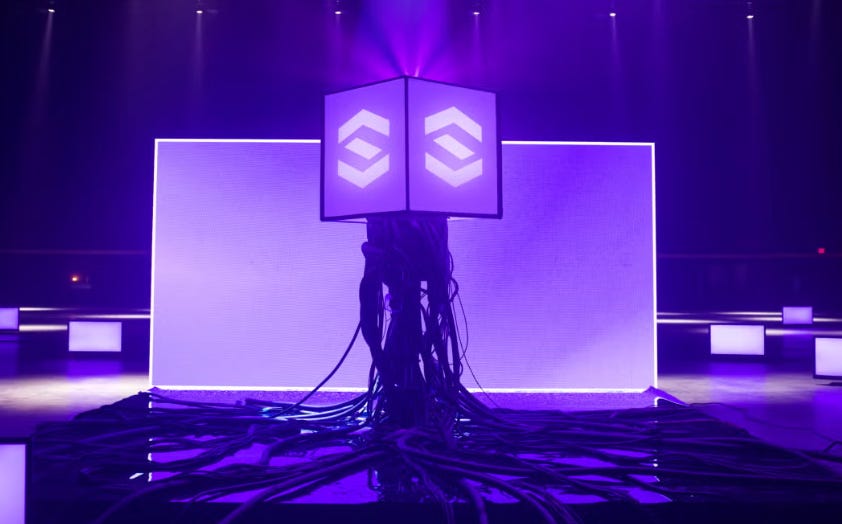
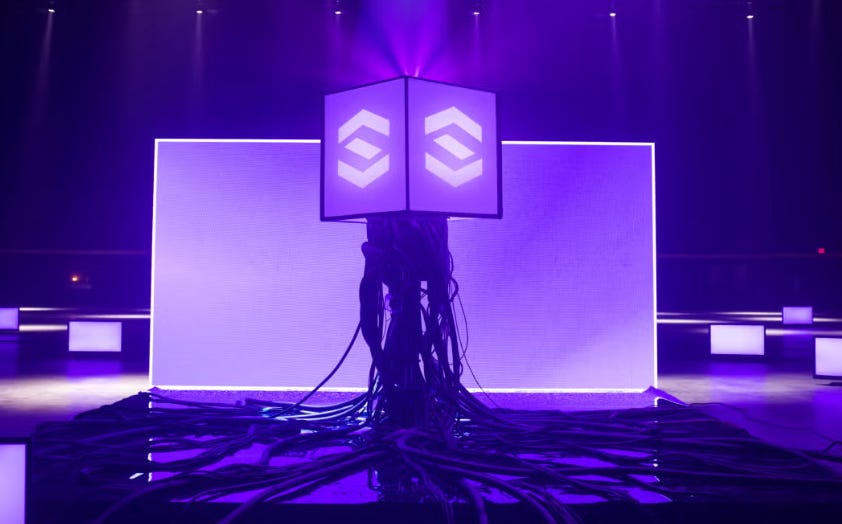
That’s the spot. And it’s a beautiful spot. The production design is cinematic, with that recurring stage-set motif of the cube-headed figure surrounded by cascading wires, the LED-lit environments, the deliberate color grading.
But the campaign doesn’t end at the video. It continues on the landing page that comes after. And that’s where the conceptual clarity has room for improvement. But before we get there, let’s chat about what SentinelOne knocked out of the park.
What SentinelOne Nailed
The most important strategic decision in this campaign happens in the first 10 seconds of the video.
Most cybersecurity creative defaults to fear. The dashboard going red. The hooded figure at the keyboard. The “biggest threat of [insert year]”. There’s a reason this is the default. Negativity bias is one of the most well-documented patterns in cognitive psychology, which means threat-based messaging feels more urgent and more worth acting on than almost any other kind of message.
Cybersecurity marketers lean into that bias because it works… Or should I say it used to work.
With 5k+ vendors in the space, the security community has become numb to marketers’ fear mongering. When everything is “the biggest threat”, it’s incredibly difficult to discern what universally is the most pressing threat.
SentinelOne went the other way. They chose to dramatize the value of their product as an absence. A man waking up calm. A woman riding a train through a quiet city. A baby sleeping peacefully. The voiceover names what didn’t happen. No systems crashing. No flights grounding. No cities going dark. The breach never came. That decision is harder than it looks, and it’s the most interesting move in the campaign.
What makes it work, beyond the contrarian instinct, is the psychology underneath it.
The campaign is built on counterfactual thinking, which is the cognitive process of imagining what didn’t happen. Research on counterfactual reasoning shows that asking someone to construct an alternative reality creates a stronger emotional response than describing one directly. When the viewer hears “you won’t remember the breach because it never came,” their brain does the work of imagining the breach. They build the catastrophe themselves, in their own head, against the backdrop of the calm visuals on screen. That’s a more powerful mechanism than showing them a dashboard turning red. The viewer is no longer a passive receiver of fear. They are an active constructor of the avoided alternative.
And the relief they feel watching the calm scenes is the relief of an outcome they just imagined losing.
The video reinforces that effect through hedonic contrast. The scenes of peace are not just peaceful. They are deliberately, almost meditatively serene. A still lake at dawn. A sleeping baby in soft blue light. A woman watching the city pass through a train window. Those visuals would feel pleasant in any context. But the campaign juxtaposes them against the implied catastrophe (the cancelled flight board, the dark cityscape, etc.) and the peace becomes more than pleasant. It becomes precious. The viewer feels the calm more intensely because the alternative is so vividly close. This is the same psychological principle that makes a hot meal taste better after a long flight or a quiet weekend feel more restorative after a hard week. Contrast intensifies experience. SentinelOne understood that and built the entire visual logic around it.
The production design itself deserves attention. The recurring stage-set motif of the cube-headed figure standing in front of vast LED panels is a strong piece of campaign visual identity. It’s distinct enough to register in a feed full of stock cybersecurity imagery, and it’s specific enough that it would carry across formats if SentinelOne chose to extend it.
The cube as a character is doing interesting symbolic work too. It’s faceless, which keeps the AI from feeling anthropomorphized in the lazy way most cybersecurity AI imagery does. It’s massive, which conveys scale without resorting to dashboard graphics. And it’s environmental, surrounding the protagonists rather than confronting them, which visually reinforces the autonomous, ambient nature of what the technology is supposed to do.
The landing page hero deserves credit for using the campaign’s own production design as the brand environment for the page. This isn’t a revolutionary move, but it’s better than the sterile template most vendors default to, where the headline sits on the left and a stock product screenshot sits on the right. A buyer who watches the video and lands on the page sees the same world.

The customer stories section is the strongest piece of work on the page. The videos are beautifully produced, the references are heavyweight (Aston Martin, Norwegian, and others), and the quotes are outcome-language rather than feature-language. “SentinelOne has changed the way we do cybersecurity.” “We believe out of the independent testing that SentinelOne is doing the best job in the market.”
Those are the kinds of statements that come from buyers who have lived with the platform, not from marketing-approved testimonials. That distinction is felt by the audience even when they can’t articulate why. Social proof at this level is hard-won, and SentinelOne earned the right to use it.
What I Might Have Explored Differently
I want to spend real time on this section because the gap between what the campaign produced and what the campaign argued is the most useful observation we can walk away with.
The hard truth is that production value cannot substitute for a strategically sound message. And in this campaign, the production is doing almost all of the heavy lifting.
Start with the hero copy on the landing page. The headline reads “Stop Threats Before They Start.” The sub-headline reads “The world’s most advanced cybersecurity platform. Built to unify, protect, and amplify teams.” Read those two lines without the visuals and ask yourself which company they describe. Every endpoint, network, identity, cloud, and SIEM vendor could put that headline on their page tomorrow. After reading the hero, I walk away with little to no understanding of what SentinelOne is actually trying to communicate that’s specific to them.
The same problem runs through the script of the video itself. Strip the visuals and read the voiceover as text.
“You won’t remember the breach because it never came. No systems crashing, flights grounding, cities going dark. In a world where AI accelerates every threat, SentinelOne’s AI stops threats before they start, shuts the door on attacks before they get in. Autonomously protecting everything. And that’s why this never was. SentinelOne AI-powered cybersecurity.”
It’s a string of category platitudes. The one moment in the script that gestures at something specific, the AI-versus-AI framing in “a world where AI accelerates every threat,” gets a single beat and is never developed. There was a real angle there. SentinelOne could have built the entire campaign around the idea that AI-powered attacks demand AI-powered defense, and made the breach-that-never-was the proof point. Instead, the AI threat angle is treated as a passing line and the script returns to the same generic outcome claim as the headline.
The three-tile section under “The AI-Powered Cybersecurity Platform” is the next place the page loses the thread. It presents AI for Security (the platform), AI SIEM (a component), and Purple AI (another component) as three equal cards.
Those are three different levels of abstraction.

The platform is the whole. The other two are parts of the whole. Putting them side by side as equal tiles flattens that hierarchy and reads like a bulletin rather than a story. A campaign landing page should answer “now that you’ve watched this, here’s the next step in the story.” This section answers “here are some product pages you can click on.” Those are different jobs.
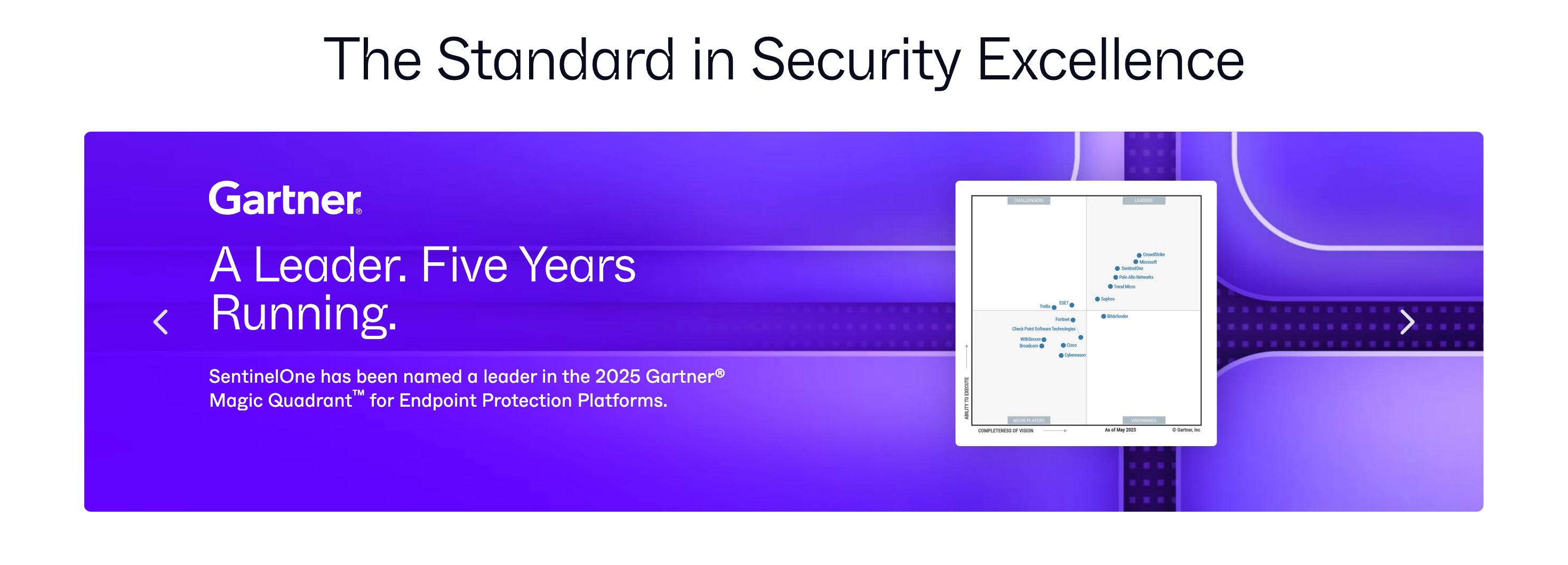
The analyst section continues the conceptual drift. The MITRE ATT&CK Evaluation result is truly strong, and SentinelOne deserves the credibility. But the second carousel slide highlights the company’s leadership in the Gartner Magic Quadrant for Endpoint Protection Platforms, which exposes a positioning conflict the campaign hasn’t resolved. The video positions SentinelOne as the AI-powered platform that protects everything. The accolades position SentinelOne as best-in-class at one specific category. A buyer landing on this page sees both and experiences conflict. The campaign creative wants to claim platform identity. The analyst proof points underneath retreat to endpoint. There’s a version of this section that would have worked, where customer outcomes prove the campaign’s specific claim. Anonymized stories of breaches that never came. A counter showing how many threats SentinelOne blocked across its install base last quarter. Anything that proves “the breach that never was” with evidence rather than analyst rankings.
And then the page closes with what is, for me, unfortunately the most telling moment of incoherence.
The final CTA section reads “Calm the Chaos With AI-Powered Cybersecurity.” Stop and read that against the campaign’s central premise. The campaign says SentinelOne’s value is the absence of chaos. The breach that never came. No systems crashing. No cities going dark. The protagonist is calm because nothing happened. Then the page closes by promising to calm chaos that’s already underway. Those are two different stories. One says we prevent the chaos from ever arriving. The other says you are currently in chaos and we will calm it.
What this exposes is something deeper about how the page was assembled. Based on my research, “Calm the Chaos” is a separate SentinelOne brand line, possibly tied to broader corporate messaging or a different campaign entirely. Dropping it onto the closing section of this campaign’s landing page suggests the page wasn’t built campaign-first. It was built by taking existing modular page components and skinning them with the new campaign’s visuals. The breach-that-never-was concept lives in the video and only in the video. Everything else on the page is generic SentinelOne real estate that the campaign didn’t rewrite.
This is the structural lesson worth taking from the work.
Campaign landing pages succeed when every section continues the campaign’s specific story. Vanta’s Calm-pliance page remains the gold standard here, where every block builds on the central idea and the reader stays inside the world the campaign created. SentinelOne built a beautiful production, then dropped it into a page architecture that wasn’t designed to carry it forward.
The closing CTA, for what it’s worth, should have read something like “See how the breach never comes.” That continues the story.
The Bottom Line
I want to be clear about what this campaign did well and what it didn’t, because the lesson is more useful than a verdict.
The video is beautifully produced. The strategic move to dramatize protection as absence deserves an applause. The customer stories section is a delicacy. None of that is small.
But the campaign demonstrates, as cleanly as any I’ve analyzed this year, that production value cannot substitute for conceptual clarity. The video has cinematic ambition. The script underneath it is interchangeable with any other vendor’s brand spot. The landing page wears the campaign’s visual identity but doesn’t carry its idea forward. The closing CTA actively contradicts the central premise.
This matters more than usual right now.
AI tools are making high-end video production radically more accessible than it was even two years ago. Cybersecurity vendors of every size are about to start producing creative that looks like SentinelOne’s. The marketing teams that win the next wave will not be the ones with the biggest production budgets. They will be the ones with the sharpest messaging and the discipline to carry those ideas through every surface of the campaign.
Every week, I write about a marketing campaign in the cybersecurity software space that stands out strategically and/or has creative execution worth studying. And every quarter, I select three “Campaigns of the Quarter” where the marketers who led the campaigns receive a free, personalized Funko Pop. Yes, I’m serious. Here’s mine as proof:
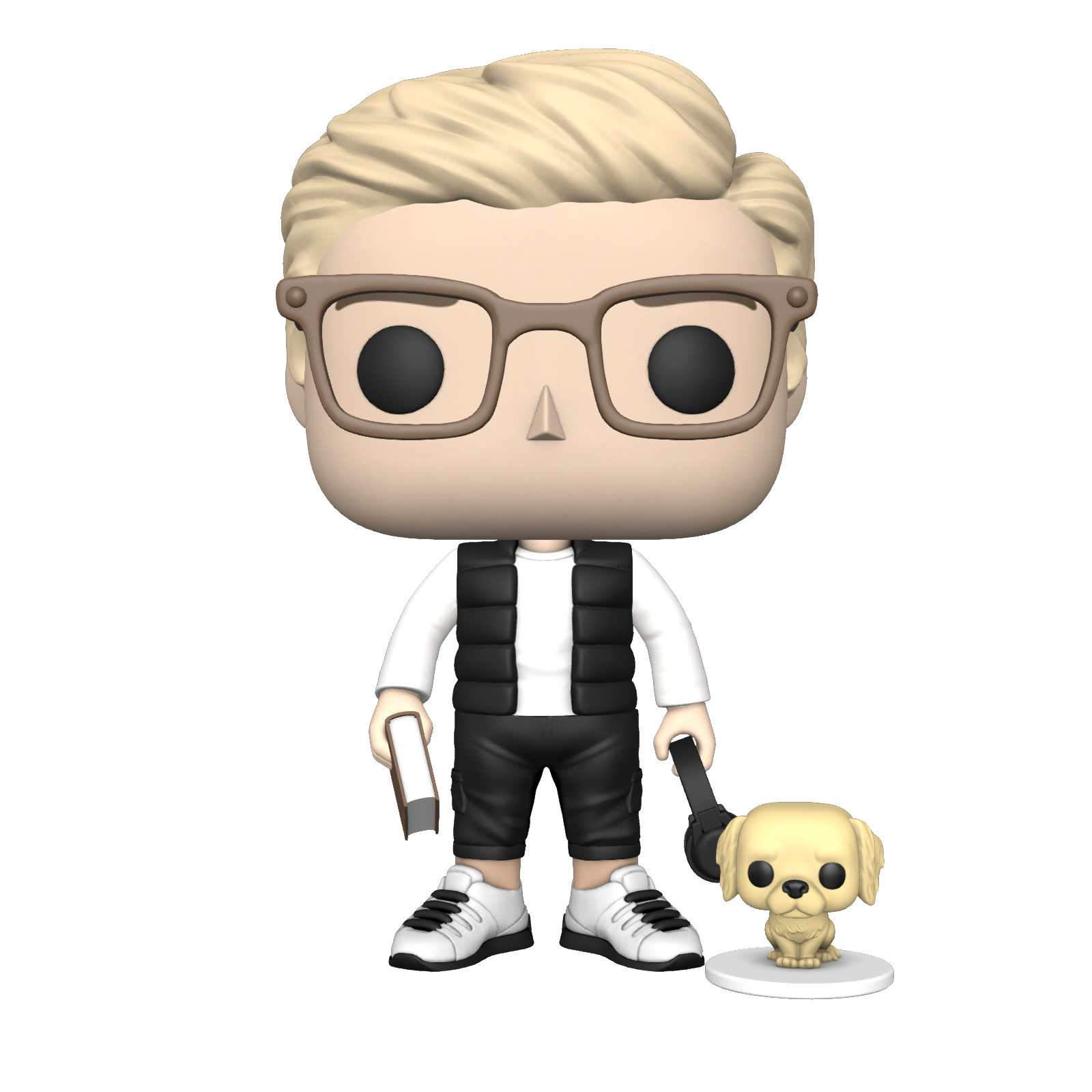
If you’ve led a campaign you’re proud of or know someone who has, message me on Substack or LinkedIn to submit it. I want to see what you’re building.
Originally published on Campaign Telemetry.
Read on Substack