Tines' The End of Muckwork
A quick note: Everything I’m sharing here is my subjective take on Tines’ The End of Muckwork campaign as I’m not privy to their performance metrics or strategy. The recommendations at the end are offered with deep respect for the Tines marketing team and is purely a thought exercise in how I might have approached certain elements differently.
Now, let’s talk about muckwork.
Introducing The End of Muckwork
Over the past few weeks, I’ve been spending a lot of time thinking about what separates a good marketing campaign from a great one. Not great in the “we won an award” sense, but great in the “this actually moves the market” sense. When I came across Tines’ The End of Muckwork campaign, I knew I had to write about it.
Before I get into the breakdown, let me say something that might surprise you: this campaign consists of exactly two assets. A video and a blog post. No white paper. No webinar series. No multi-touch content funnel with seventeen pieces and a nurture track. Two assets. And it’s one of the most impressive brand campaigns I’ve seen in a bit. Almost shed a tear. I’ll come back to why that matters.
What Tines Was Up To with The End of Muckwork
A strategic move that the best marketing teams make is giving a name to a problem their market already experiences but hasn’t had language for. Most of the time, these names are academic, forgettable, the kind of thing that lives in an analyst report and dies there. Tines took a different approach. They called it “muckwork.”
There is a psychological principle called the Von Restorff Effect, sometimes called the isolation effect, which says that items that stand out distinctly from their peers are more memorable. Muckwork is a slightly irreverent, made-up word sitting in a sea of sterile security terms and concepts. It is going to stick. And once you name a problem your audience lives with every day, you own a piece of their mental real estate in a way no product feature ever could. This is “Name It to Tame It” applied to security marketing, and it is a powerful thing when executed well.
What Tines Executed Brilliantly
Let’s start with the video, because it is genuinely exceptional.
The first thing I noticed was the timing. Slightly over one minute. Long enough to tell a complete story, short enough to transfer across every marketing channel without losing people. That discipline is harder than it sounds.
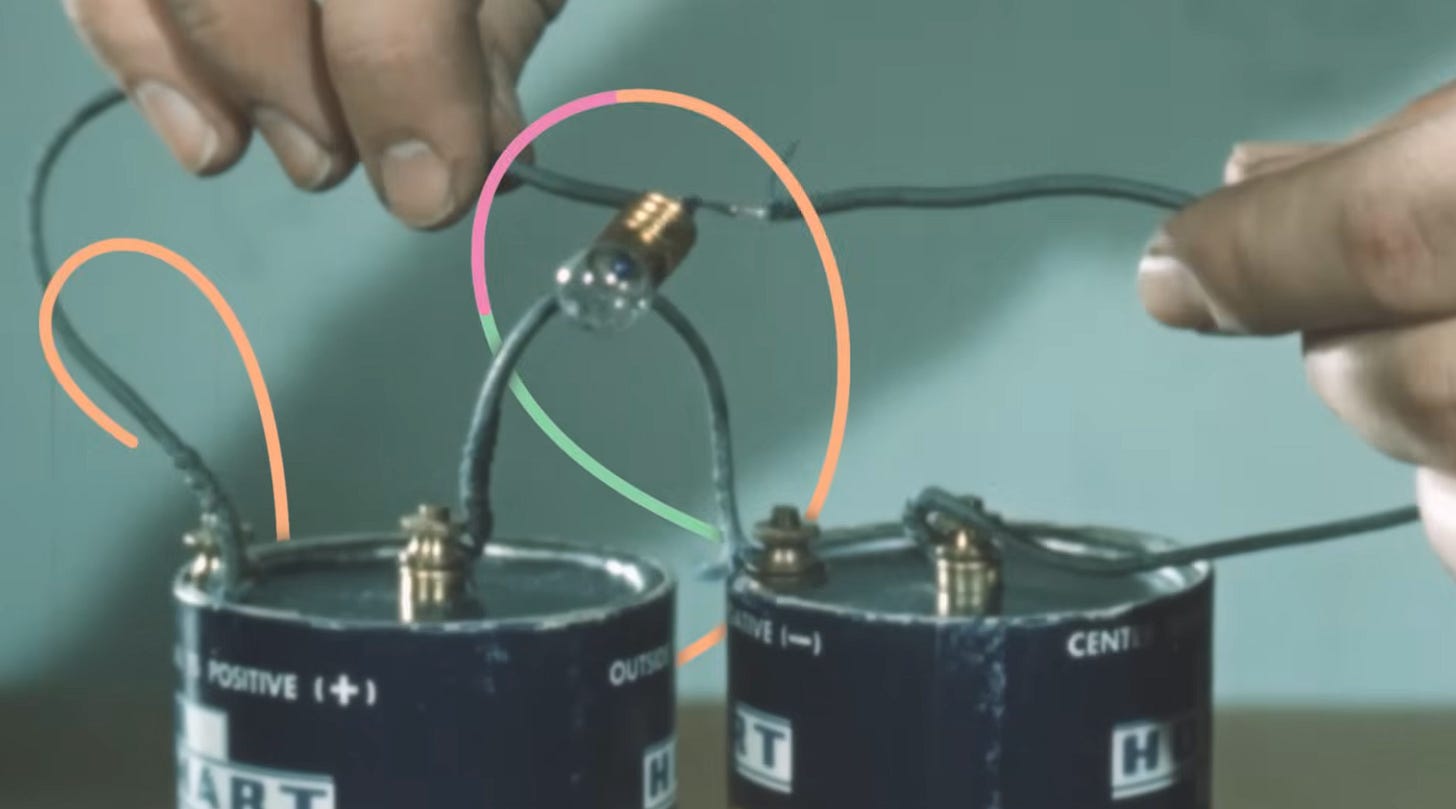
The creative concept is where it gets really interesting. Tines set the video in the early days of computing, a grayscale world of clunky machines, computer rooms, and manual processes. The implicit message is devastating in the best possible way: we are still doing the same manual work people were doing when computers first came out. That should not be the case. By anchoring the visual language in that era, Tines makes muckwork feel not just painful but embarrassing.
The video then does something I rarely see executed this well. It runs through a rapid-fire series of muckwork examples at high tempo, mirroring each pain point to period footage. If you are in security, you are almost certainly nodding along to several of them. That rapid recognition of your own pain is not accidental. It is a deliberate creative choice and it lands.
Then comes the moment that honestly had me jumping out of my seat. As the video shifts from defining the problem to introducing Tines as the solution, the grayscale world bursts into color. A rainbow-like banner moves through the frame. The words themselves take on color. It is one of the most artful visual metaphors I have seen in a security marketing video. Color equals Tines. Tines equals change. No voiceover needed.
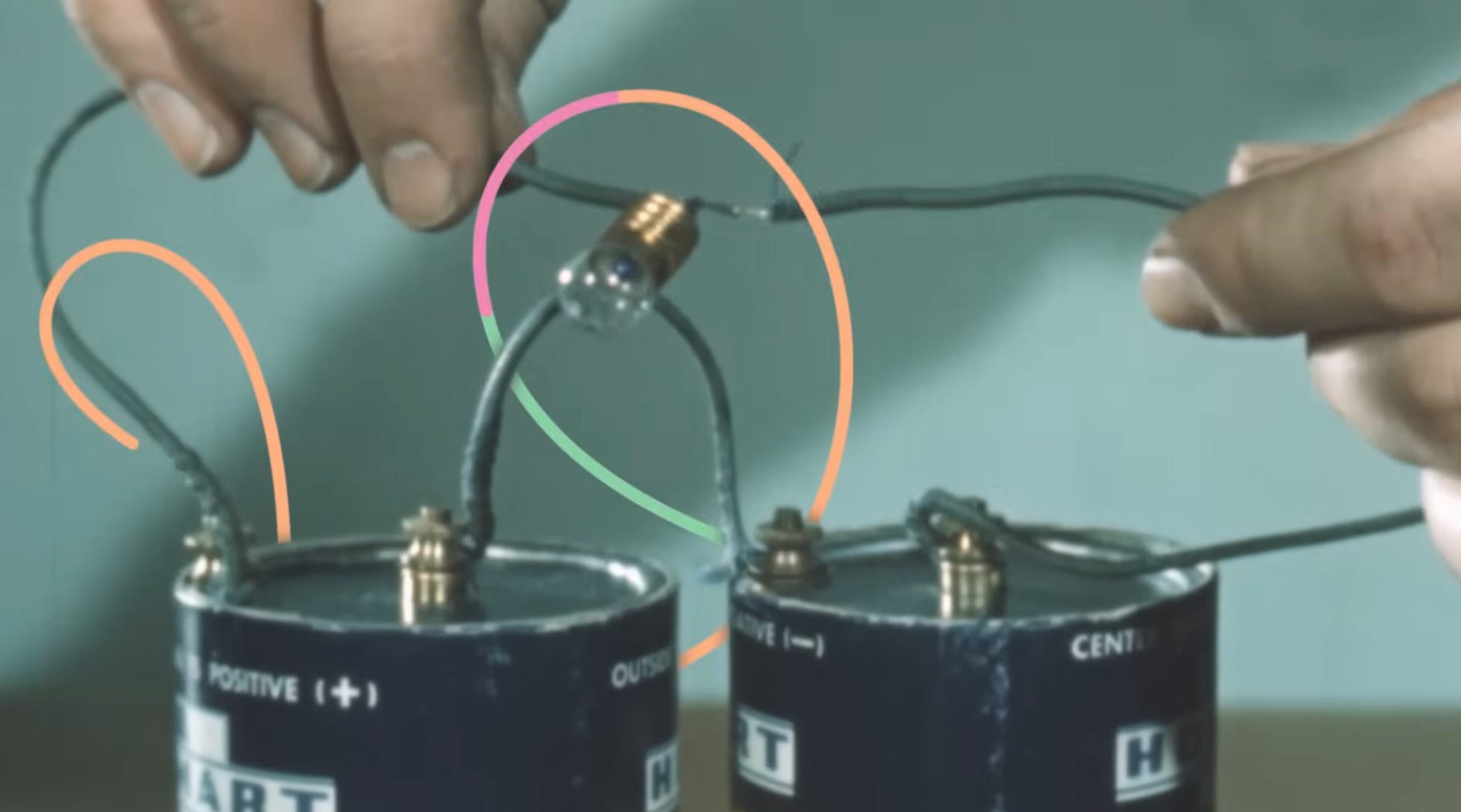
The back half of the video reframes every pain point as a solved problem. Not “Tines does X.” Instead: “What if compliance was streamlined and prioritization was automatic?” and “What if everything just connected and stayed synced?” It brings the audience along rather than lecturing at them. This is marketing 101 and it is shockingly rare to see it executed this cleanly.
And then there is distribution. As of March 2026, this video has 469k views on YouTube, driven in significant part by a real media buy behind it. This is a theme I come back to again and again: teams create great work and then don’t put money behind it. Tines made the video AND distributed it. That combination is what separates impact from effort.
Now, the blog. First (and I know this may sound silly) I appreciate that it exists at all. I have seen cases where a brand video launches and the team points traffic to the homepage because a supporting content asset was never built. That is a waste of everything the video earned. Tines built the companion piece.

More importantly, the blog is authored by the CEO and Co-Founder, Eoin Hinchy. Whether or not the CEO wrote every word is beside the point. That byline signals organizational conviction. It tells the market that muckwork is not a concept the product marketing team invented on a Tuesday. It is something leadership believes in. That difference in credibility is significant and it is a move more teams should consider when they are bringing a foundational concept to market.
The blog ends with a CTA pointing to customer stories from Jamf, Snowflake, and Elastic. That is exactly the right instinct. You introduced the problem, you introduced the solution, now show it working at companies people respect. The logic is clean.
What I Might Have Explored Differently
Build the Customer Zero Content Piece
Within the blog, Tines references themselves as “Customer Zero,” meaning Tines uses Tines internally to eliminate muckwork. That is an incredible story. Employees across the company have apparently discovered and built their own use cases. And yet there is no dedicated content piece that brings that story to life. The sticky banner on the right side of the blog, which scrolls with you as you read, advertises the Tines community. That real estate should have been pointing to a piece called something like “How Tines Uses Tines to Eliminate Muckwork.” That is the natural next step in the buyer’s journey coming out of that blog. Instead, it goes to a community page. In my opinion, a missed opportunity to pull the reader deeper.
Make “muckwork” Front-and-Center in Customer Stories
The customer stories referenced in the CTA are good. But here is a small thing that would have made them pack more of a punch: the word muckwork appears only once or twice in each story and it is easy to miss. If you are going big on a concept, it needs to bleed into every customer story you are using to support it. Something as simple as renaming the "The Challenge" section of each customer story to "The Muckwork" would have reinforced the concept at every touchpoint. Small change. Big signal.

Commit to “muckwork” Across the Website
Since muckwork was introduced in April, the word appears across thirteen pages on the Tines website. That is a step in the right direction. But it does not appear in a front-and-center way on either of those thirteen pages or on the homepage, platform page, or several other high priority web pages. And the blog is not internally linked from either of those core pages. Those are likely your highest-traffic, highest-intent destinations on the site.
To be completely fair, this could be a deliberate choice. Tines may be testing market reception before fully committing their core site architecture to the concept, which is actually a smart way to manage the risk of a new idea. I deeply believe in testing before scaling. But if the market signals are there, the next move is to bring muckwork front-and-center where it belongs.
Turn Customer Zero into a Social Movement
The idea I keep coming back to, though, is this: how powerful would it have been to activate all of those Customer Zero stories through the people who lived them?
Imagine every Tines employee posting on social media about the specific muckwork they eliminated with Tines. Short videos, personal stories, each one carrying the headline "The End of My Muckwork." The visual branding aligns perfectly with the campaign. The content is authentic because it is real. The volume would have been enormous because it is coming from dozens of people, not one company account. And it transforms a great two-asset campaign into something that feels like a movement. That execution costs almost nothing compared to the YouTube media buy that was already made.
The Bottom Line
Tines gave us a master class in what an impactful brand campaign actually looks like. Not big in terms of asset count. Big in terms of strategic importance to the company and expected market impact. Two assets, executed with genuine craft, distributed with conviction, and anchored to a concept that names a real problem in a way people will actually remember. That is the standard.
The gaps are real but they are fixable, and in many ways they represent the most exciting part of what comes next for this campaign. The foundation is exceptional. Now it is time to fully commit to it.
Every week, I write about marketing campaigns in the cybersecurity software space that stand out strategically and/or have creative execution worth studying. And every quarter, I select three “Campaigns of the Quarter” where the marketers who led the campaigns receive a free, personalized Funko Pop. Yes, I’m serious. Here’s mine as proof:

If you’ve led a campaign you’re proud of or know someone who has, message me on Substack or LinkedIn to submit it. I want to see what you’re building.
Originally published on Campaign Telemetry.
Read on Substack